
Residential Maintenance • 6 minutes
Back for the Season? A Snowbird's AC Startup Checklist for Treasure Coast Homes
By Scott Camire, Owner | A/C Advantage Inc. •
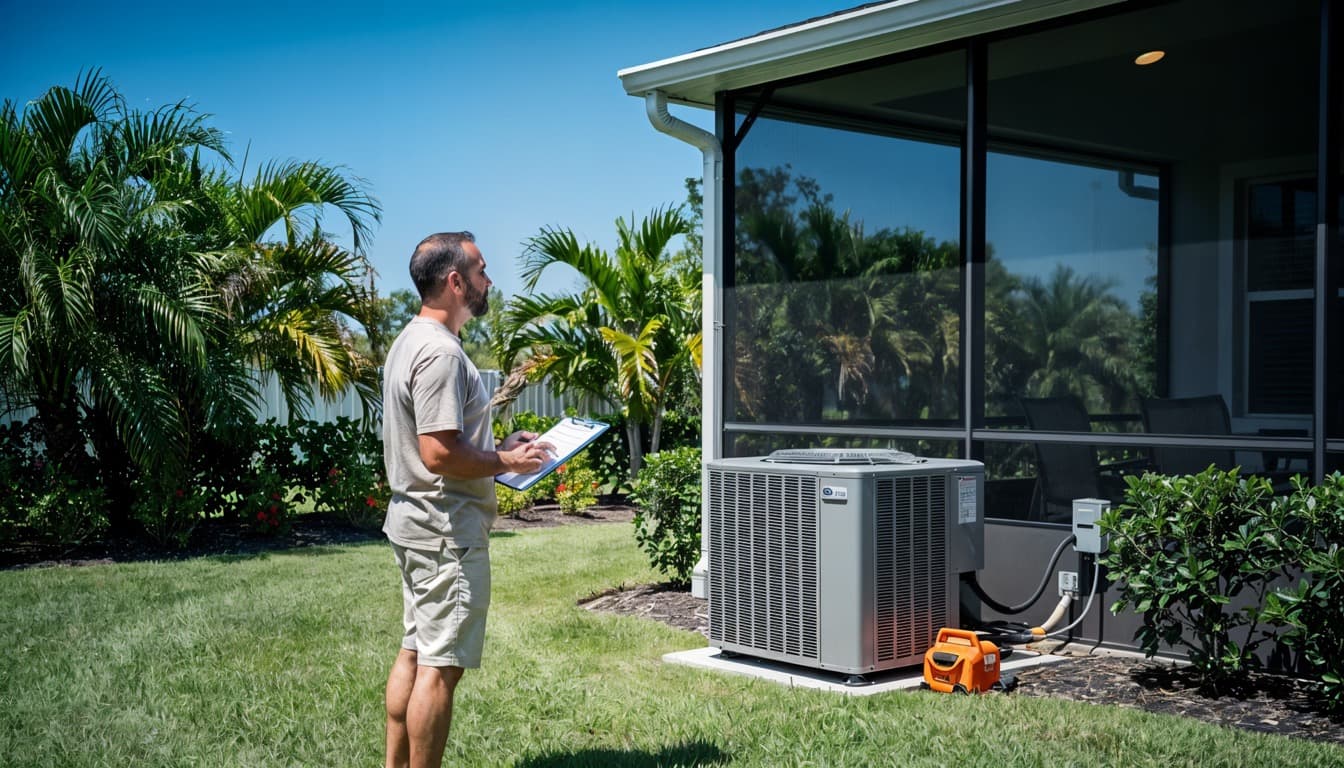
Every October and November, thousands of seasonal residents return to Port St. Lucie, Stuart, Jensen Beach, Vero Beach, and the rest of the Treasure Coast. After five or six months away, the first thing most people do is walk in, drop the bags, and turn the thermostat down.
I've been working on air conditioning and refrigeration systems since 1978, and I can tell you that the first few hours after a homeowner returns are when we find most of the problems that built up over the summer. The system may have been running the whole time you were gone, or it may have been set high to save money. Either way, a Florida summer is hard on an empty house.
Here is the checklist I recommend before you settle back in.
Step 1: Take a Good Look Before You Touch the Thermostat
Before you change any settings, walk the house for two minutes and use your nose and eyes.
- • Smell for mustiness. A damp, earthy odor usually means humidity got ahead of the AC while you were away.
- • Check the air handler closet or garage unit. Look for water in the drain pan, rust stains, or water marks on the floor.
- • Look at ceilings near supply vents. Brown rings or sagging drywall can point to a sweating duct or a clogged condensate line.
- • Check for visible mold spots on vent covers, closet walls, and the backs of furniture pushed against outside walls.
If you see standing water or active leaks, turn the system off at the thermostat and call us before running it again.
Step 2: Check the Condensate Drain Line
In our climate, the condensate drain is the part of the system most likely to cause trouble after a long absence. Algae and sludge grow in the line all summer. If the line clogs, water backs up into the pan and, depending on how your system was installed, either shuts the unit off or overflows into the ceiling or closet.
- • Find the outdoor end of the drain line (usually a white PVC pipe near the outdoor unit or foundation) and confirm it's dripping when the system runs.
- • If your system has a float switch and the AC won't start, a clogged drain is one of the first things we check.
- • Don't pour bleach into the line and hope for the best. If it's already clogged, that rarely clears it, and too much can damage some components.
Step 3: Replace the Air Filter
Even with no one home, the blower moves a lot of air over the summer. A filter that looked fine in April can be loaded with dust and moisture by October. Swap it out before you start running the system hard. Write the date on the new filter so you remember when it went in.
Step 4: Walk Around the Outdoor Unit
The outdoor condenser needs open space to move heat out of your home. Over the summer, it can get buried.
- • Clear at least two feet around the unit. Trim back shrubs, grass, and vines.
- • Remove leaves, palm fronds, and storm debris from the top and sides.
- • Look for bent fins, a leaning pad, or damage from summer storms.
- • Check for salt buildup and corrosion if you're near the Intracoastal or the beach. Salt air is one of the fastest ways to shorten a unit's life here.
Never spray the unit with a pressure washer. It flattens the coil fins and can force water into electrical parts.
Step 5: Start the System and Listen
Now set the thermostat to a reasonable number. I usually suggest 76 to 78 degrees for the first day. Then stay near the system for about 15 minutes.
- • The outdoor unit should start within a few minutes and run smoothly.
- • Listen for buzzing, clicking without starting, grinding, or squealing. A buzz with no start is often a failing capacitor.
- • Put your hand over a supply vent. The air should be clearly cooler than the room within 10 to 15 minutes.
- • Check that the outdoor drain line is dripping after 20 to 30 minutes of run time.
Step 6: Watch Your Humidity for the First Week
Temperature is only half of comfort in Florida. If the house feels cool but clammy, humidity is still high. An inexpensive hygrometer is worth having. Indoor humidity should generally stay below about 55 to 60 percent. Higher than that for days at a time is how mold and musty smells get started.
When to Call a Professional Instead
Call for service if you notice any of the following:
- • The AC runs but the air isn't cool
- • Ice on the refrigerant lines or indoor coil
- • Water in the drain pan, closet, or ceiling
- • The breaker trips when the system starts
- • A burning or electrical smell
- • A musty smell that doesn't clear after a day of running
These are the problems that turn into emergencies over the Thanksgiving holiday, when everyone's family is in town and every HVAC company is booked.
Schedule Your Fall Tune-Up Before the Rush
The best move for a returning snowbird is to schedule a tune-up in the first week you're back. A technician can clean the drain, check refrigerant and electrical parts, test the capacitor, and catch small problems while they're still small. Our team has found that most emergency breakdowns are preventable with regular maintenance, and fall is the easiest time of year to get on the schedule.
If you're leaving again next spring, ask us about a maintenance plan that covers a spring visit before you head north and a fall visit when you return.
Frequently Asked Questions
Should I leave my AC running while I'm gone for the summer in Florida?
Yes. Most Florida homeowners should keep the AC running while away, usually somewhere in the high 70s to low 80s, to control humidity. Turning it off completely can lead to mold, warped wood, and damaged furnishings. A dehumidifier or a thermostat with a humidity setting adds more protection.
Why does my house smell musty when I come back from a long trip?
A musty smell almost always points to high indoor humidity or moisture in the AC system, often in the drain pan, coil, or ductwork. Replace the filter, run the system, and if the smell stays after a day, have the system inspected.
How long should it take my AC to cool the house after I return?
In a house that was kept at 80 to 85 degrees, a properly working system should bring temperatures down a few degrees within the first hour or two. If it's barely moving after several hours, something needs attention.
What should a fall AC tune-up include?
A proper tune-up includes cleaning and flushing the condensate drain, checking refrigerant performance, testing the capacitor and electrical connections, inspecting the coils, and checking airflow and thermostat operation.
About the author
Scott Camire, Owner of A/C Advantage Inc.
Scott Camire is the founder of A/C Advantage Inc. in Port St. Lucie, Florida. He began his career in HVAC and commercial refrigeration in 1978 and founded A/C Advantage in 2006, building the company on what he calls “old fashioned service with modern technology.” A/C Advantage is a Florida Certified Mechanical Contractor (License #CMC1249807) with EPA-certified technicians, serving homes and businesses across the Treasure Coast and the Palm Beaches, including Port St. Lucie, Stuart, Palm City, Jensen Beach, Fort Pierce, Vero Beach, Sebastian, and Tradition.
Need help with your system?
Call A/C Advantage at (772) 336-7366. A live person answers 24 hours a day, 365 days a year. Or schedule service online.