Residential Maintenance • 7 minutes
Summer AC Checklist for Florida Seasonal and Vacation Homes
By Scott Camire, Owner | A/C Advantage Inc. •
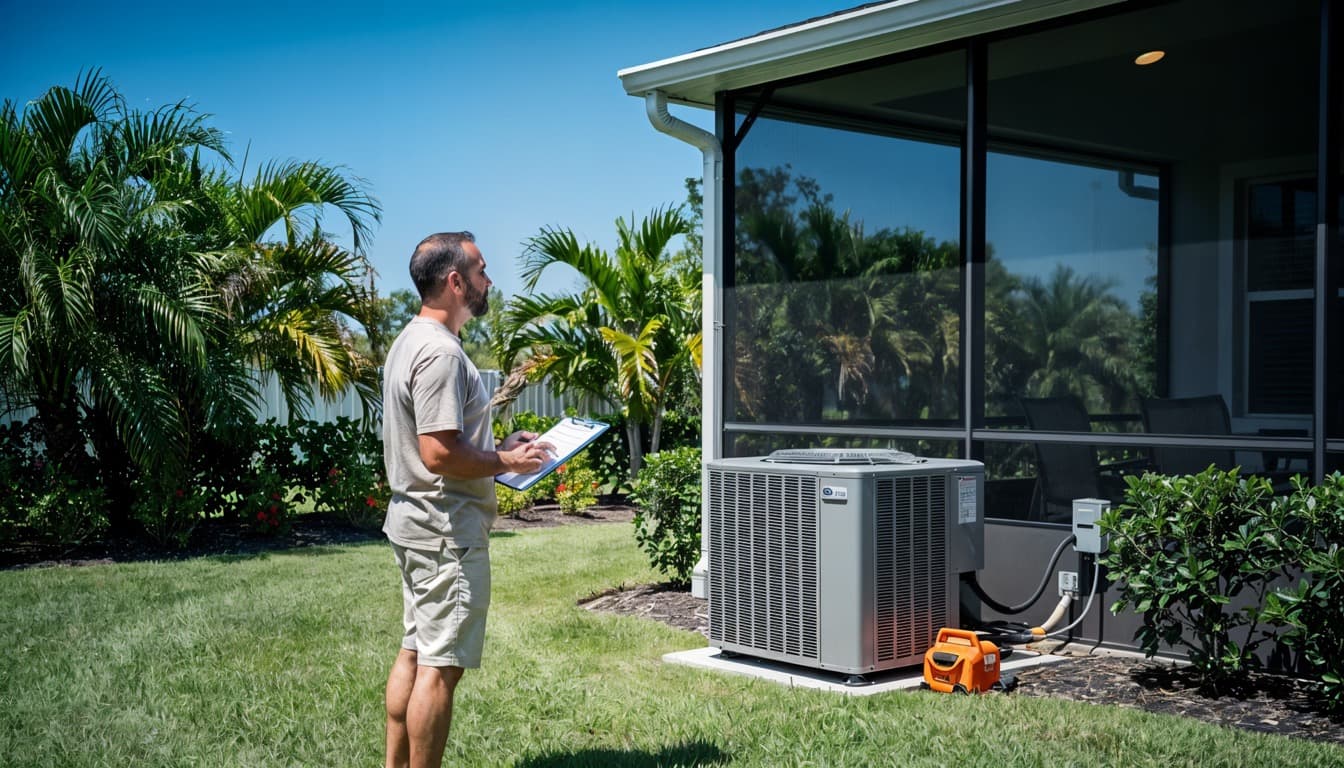
A Florida seasonal home has a different HVAC risk than a house that is occupied every day. When no one is there, a blocked condensate drain, high indoor humidity, a tripped breaker, or a system that starts short-cycling can continue unnoticed. By the time an owner returns to the Treasure Coast, a small comfort issue may have become a moisture, odor, or water-damage concern.
A good summer checklist is not about making the home ice cold while it sits empty. It is about keeping the equipment in a reasonable operating range, controlling moisture, maintaining access for service, and giving a local contact enough information to act if something changes. Every home and thermostat is different, so use the equipment manufacturer’s instructions and your property manager’s process where those apply.
Set a sensible unoccupied-home plan
Before leaving, decide who is responsible for checking the home and how often. A neighbor, property manager, family member, or professional home-watch service can be valuable, but they need a clear list. Include the thermostat location, your preferred contact sequence, the HVAC service provider, the water shutoff location if appropriate, and any alarm or remote-monitoring instructions.
Ask your HVAC professional about a suitable temperature and humidity strategy for your particular house. A setting that is too aggressive can waste energy; turning the system completely off can allow heat and moisture to build up. The right approach depends on construction, occupancy schedule, thermostat capabilities, indoor humidity, and whether the home has other moisture concerns. Do not rely on one generic setting for every Florida property.
If your thermostat has remote access, test it while you are still home. Confirm you can see the current temperature, change settings as intended, and receive alerts if the model supports them. A remote thermostat is useful, but it is not a substitute for a person checking for water, odors, power loss, or a noisy system.
Take care of the simple airflow items
Replace or inspect the filter before departure, using the correct size and installation direction. Write the filter size and replacement date in your home binder or phone notes. Do not leave the system running without a filter, and do not stack filters to make them last longer.
Walk through the house and make sure supply vents and return grilles are not blocked by furniture, rugs, luggage, or stored items. Check that interior doors are positioned to allow normal airflow according to the way the house is designed. In an empty home, it is easy for a closet or guest room to become a storage area that chokes a return path.
If you have a dehumidifier, condensate pump, or drain pan alarm, test only the user-accessible functions described in its instructions. Do not pour chemicals into the AC drain line, bypass a float switch, or open the air handler. Florida condensate problems are common enough to deserve professional attention, especially if there has been a water backup before. See AC Drain Line Problems in Florida Homes for signs that a drain issue is developing.
Walk the outside of the property
From the ground, look at the outdoor condenser area. Remove loose patio items, leaves, and easily accessible yard debris from around the unit. Keep landscaping from crowding the cabinet, but do not use the equipment as a shelf or build a tight cover around it. The unit needs airflow and drainage.
Check that gutters, roof drainage, and irrigation are not obviously directing water toward the equipment or the home’s mechanical areas. You are looking for conditions to report, not doing electrical or refrigeration work. If the cabinet is damaged, the pad has shifted, wiring is exposed, or there is standing water near electrical equipment, contact a qualified professional.
For coastal properties, salt air and irrigation overspray can add to wear. A normal maintenance visit gives a technician an opportunity to inspect visible corrosion, coil condition, electrical components, drainage, and overall operation. It is better to establish that baseline before the home sits through a long hot spell.
Prepare the home-watch contact
Give your local contact a short script. Ask them to report the thermostat reading, whether airflow is present, any water around the indoor unit, unusual odors or noises, visible ice, and whether the outdoor unit appears to be running. Tell them not to open panels, reset a breaker repeatedly, or attempt electrical or refrigerant repairs.
A photo of a thermostat alarm or water stain can be helpful. A list of observed facts is even better: “thermostat reads 82, set at 76, airflow is weak, no water visible.” That lets us triage the call without asking someone to become an HVAC technician.
Make sure the contact can grant access if you are traveling. Provide gate codes and service-entry instructions through a secure method, keep pets and alarm systems in mind, and tell the HVAC company who is authorized to approve work. Those details can save a day when a vacant home has a moisture concern.
Schedule service before departure, not after arrival
A seasonal arrival should be about enjoying your property, not discovering that the AC has been struggling for weeks. Schedule maintenance before a long absence or shortly after you return, particularly if the system has had drain issues, humidity complaints, water near the air handler, recurring repairs, or unusual runtime.
At A/C Advantage, we can inspect the residential system, document the condition we find, and explain what needs attention without guessing from a remote thermostat. Contact us for a seasonal-home AC maintenance visit or a diagnostic call before your next extended trip. A practical plan, a clean access path, and a local contact give your Florida home a much better chance of staying comfortable and dry while you are away.
Related hub: How Often Should You Service Your AC in Florida?
About the author
Scott Camire, Owner of A/C Advantage Inc.
Scott Camire is the founder of A/C Advantage Inc. in Port St. Lucie, Florida. He began his career in HVAC and commercial refrigeration in 1978 and founded A/C Advantage in 2006, building the company on what he calls “old fashioned service with modern technology.” A/C Advantage is a Florida Certified Mechanical Contractor (License #CMC1249807) with EPA-certified technicians, serving homes and businesses across the Treasure Coast and the Palm Beaches, including Port St. Lucie, Stuart, Palm City, Jensen Beach, Fort Pierce, Vero Beach, Sebastian, and Tradition.
Need help with your system?
Call A/C Advantage at (772) 336-7366. A live person answers 24 hours a day, 365 days a year. Or schedule service online.