Commercial Refrigeration • 6 minutes
Is Your Restaurant's Refrigeration Ready for Snowbird Season and the Holiday Rush?
By Scott Camire, Owner | A/C Advantage Inc. •
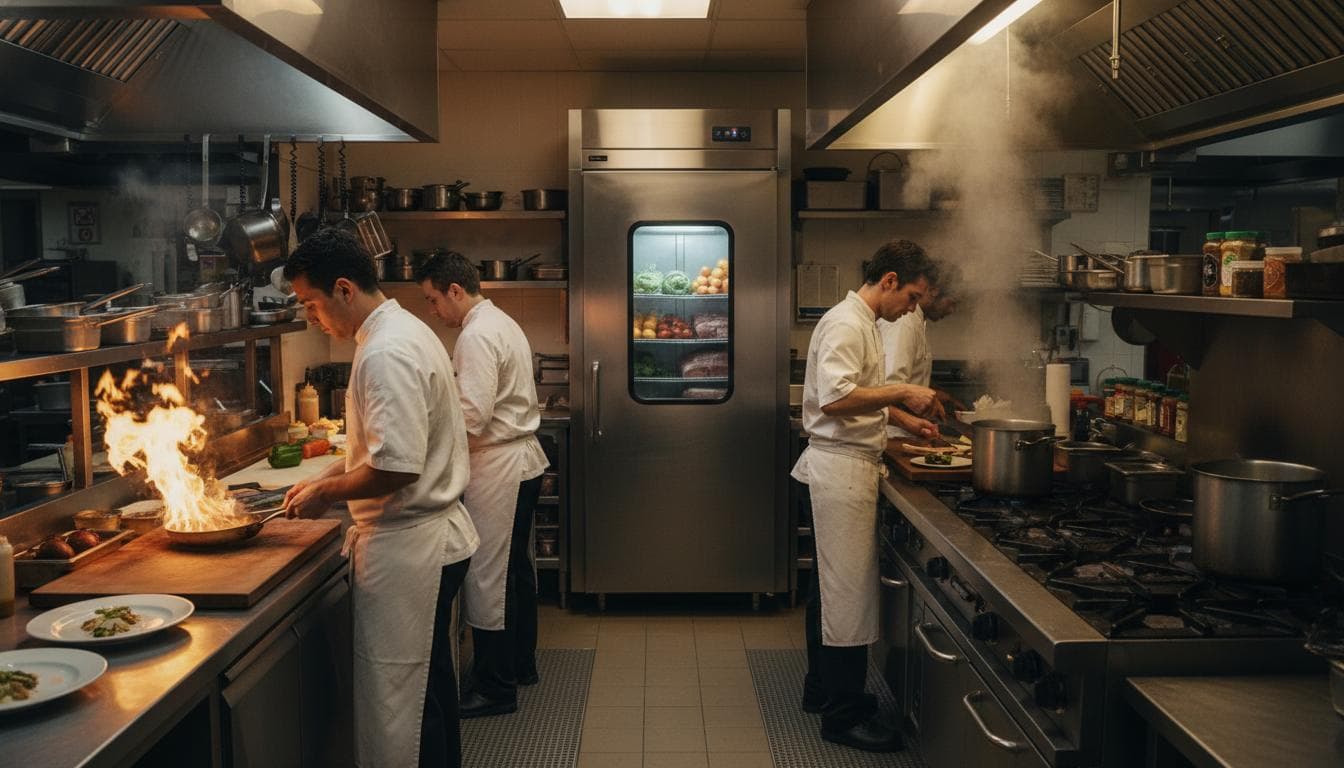
On the Treasure Coast, restaurant traffic doesn't build slowly. Seasonal residents come back in October and November, Thanksgiving and the holidays land on top of that, and by January many restaurants from Vero Beach to Stuart are running at full capacity until Easter.
That's exactly when refrigeration equipment tends to fail. Walk-in doors open and close more often, reach-ins get packed tighter, ice machines run nonstop, and condensers that struggled through a hot, humid summer finally give out. I've been servicing commercial refrigeration since 1978, and the pattern hasn't changed: the restaurants that prepare in October have a much calmer season than the ones that wait.
Here's how to get ready.
Why October Is the Right Time
- • Your equipment just got through the hardest months of the year. Florida summers push condensers to their limits. Wear and tear shows up now.
- • Service companies have more open scheduling before the season fills up.
- • Repairs are cheaper when they're planned. An after-hours emergency call during a Saturday dinner rush costs more in labor, lost product, and lost sales than a scheduled visit.
- • Health inspections don't take the season off. Cold-holding problems are much easier to fix before an inspector finds them.
Walk-In Coolers and Freezers
Your walk-in is usually the most valuable storage in the building. A single failure can mean throwing out thousands of dollars in product.
- • Check door gaskets and hinges. Torn or flattened gaskets let warm, humid air in, which makes the system work harder and causes ice buildup. Close the door on a dollar bill. If it slides out easily, the seal is weak.
- • Look for ice on the evaporator coil or ceiling. Ice buildup usually means an air leak, a defrost problem, or a failing door heater.
- • Confirm the door closes on its own. Busy staff will not always push it shut.
- • Keep product off the floor and away from the evaporator fan so air can circulate.
- • Review your temperature logs. A cooler that slowly creeps up a degree or two during service is telling you something.
Reach-In Refrigerators and Prep Tables
Reach-ins and sandwich prep units take the most abuse during a rush.
- • Clean the condenser coils. On many reach-ins, the coil sits near the floor and collects grease and flour dust quickly.
- • Check that prep table lids and drawers seal fully.
- • Watch for units that run constantly or feel warm on the outside.
- • Make sure nothing is blocking the air intake or exhaust.
Ice Machines
During season, ice demand can double. An ice machine that barely keeps up in September will fall behind in January.
- • Schedule a cleaning and sanitizing. Scale and slime slow production and can affect ice quality.
- • Replace water filters on the manufacturer's schedule.
- • Check that the condenser (air-cooled or water-cooled) is clean and has room to breathe.
- • Listen for unusual noises and watch for thin, cloudy, or partial ice cubes.
Rooftop and Outdoor Condensing Units
Many restaurant refrigeration systems have condensing units on the roof or behind the building, where they deal with direct sun, salt air, and summer storms.
- • Have coils cleaned and inspected for corrosion.
- • Check electrical connections, contactors, and capacitors.
- • Confirm refrigerant levels and look for signs of oil staining, which can point to a leak.
- • Make sure debris from summer storms hasn't damaged fins or fan blades.
Train Your Staff to Spot Early Warning Signs
Your cooks and servers see your equipment far more than any technician does. Give them a short list of things to report right away:
- • A cooler or freezer reading above normal
- • Ice building up on coils, doors, or product
- • Water pooling under or around equipment
- • New noises such as buzzing, rattling, or grinding
- • Doors that don't seal or close on their own
Post the number for your refrigeration company where the closing manager can see it. For A/C Advantage customers, that's (772) 336-7366, answered by a live person 24 hours a day, 365 days a year.
Put a Maintenance Contract in Place Before the Season
A commercial refrigeration maintenance contract gives you scheduled visits, written findings, and priority response when something does go wrong. For restaurants, the value is simple: equipment problems get found on a Tuesday afternoon instead of during a Friday night rush.
Our team has found that most emergency equipment failures are preventable with regular maintenance. If you don't have a plan in place, October is the time to set one up.
Frequently Asked Questions
What temperature should a restaurant walk-in cooler be?
Under the FDA Food Code, which Florida follows for restaurant inspections, cold-held foods must be kept at 41°F or below. Most operators set walk-in coolers between 35°F and 38°F to give themselves a margin during busy service. Freezers are typically kept at 0°F or below.
How often should commercial refrigeration be serviced?
Most restaurants benefit from preventive maintenance at least two to four times a year, depending on the equipment, the kitchen environment, and how hard it runs. High-volume kitchens and ice machines often need more frequent attention.
Why is my walk-in cooler icing up?
Common causes include worn door gaskets, a door that's left open or doesn't close fully, a defrost system problem, or low refrigerant. Ice buildup reduces cooling capacity and should be looked at before it causes a temperature failure.
How much does a refrigeration failure cost a restaurant?
Beyond the repair itself, costs can include spoiled product, overtime, lost sales during service, and possible health code issues. Planned maintenance is almost always less expensive than an emergency failure during peak season.
About the author
Scott Camire, Owner of A/C Advantage Inc.
Scott Camire is the founder of A/C Advantage Inc. in Port St. Lucie, Florida. He began his career in HVAC and commercial refrigeration in 1978 and founded A/C Advantage in 2006, building the company on what he calls “old fashioned service with modern technology.” A/C Advantage is a Florida Certified Mechanical Contractor (License #CMC1249807) with EPA-certified technicians, serving homes and businesses across the Treasure Coast and the Palm Beaches, including Port St. Lucie, Stuart, Palm City, Jensen Beach, Fort Pierce, Vero Beach, Sebastian, and Tradition.
Need help with your system?
Call A/C Advantage at (772) 336-7366. A live person answers 24 hours a day, 365 days a year. Or schedule service online.