Residential Replacement • 5 minutes
How Long Does an AC Last in Florida? What Shortens It and What Extends It
By Scott Camire, Owner | A/C Advantage Inc. •
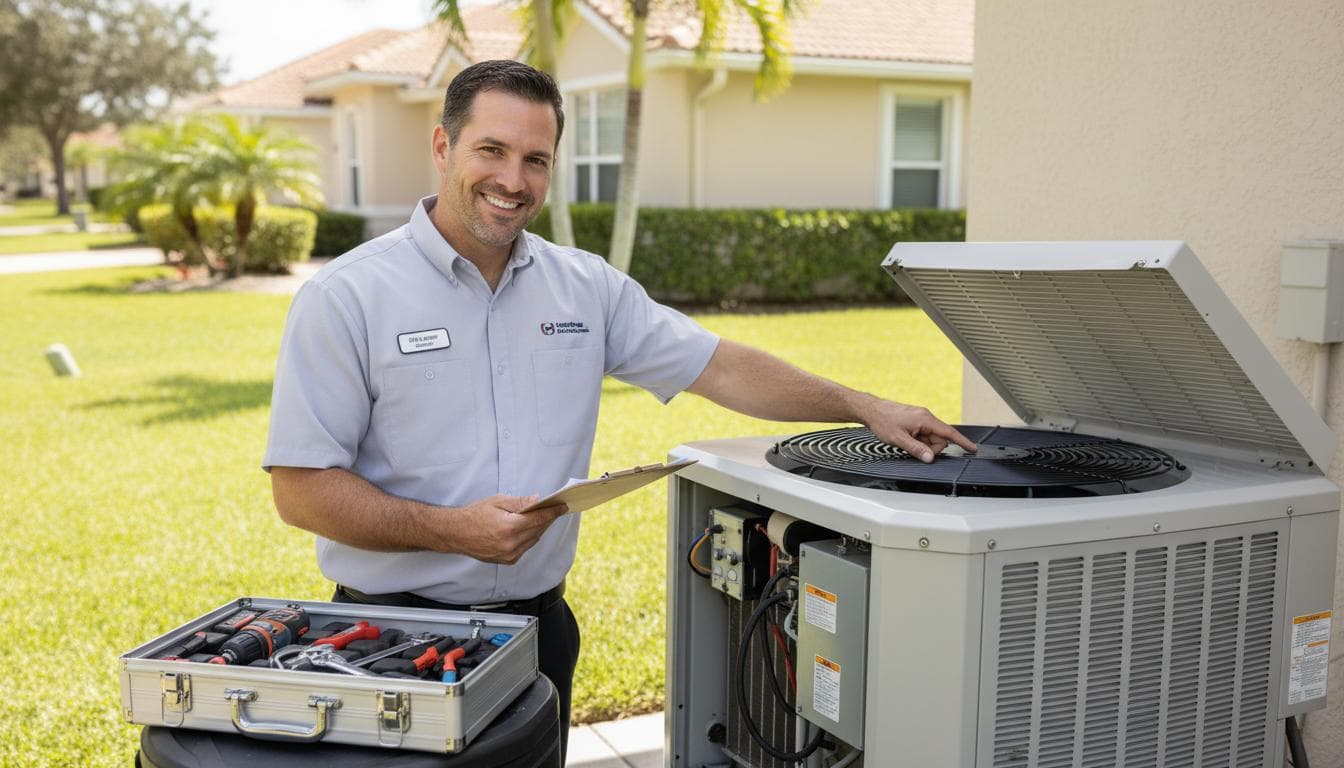
It's one of the questions I hear most: "How long should my air conditioner last?" You'll see national averages online of 15 to 20 years. Here on the Treasure Coast, that number is usually lower, and there are good reasons why.
I've been working on air conditioning systems since 1978, long enough to see several generations of equipment come and go. Here's what I've learned about how long systems really last in Florida and what makes the difference.
The Short Answer
Many air conditioners in Florida last roughly 10 to 15 years. Some well-maintained systems in good locations go longer. Systems near the coast, systems that were poorly installed, and systems that never get maintained often fail sooner.
The reason is simple: runtime. An air conditioner in Ohio might run hard for three or four months a year. In Port St. Lucie, it may run 10 to 12 months a year, often for long stretches, in heat and heavy humidity. More hours means more wear.
What Shortens an AC's Life in Florida
Salt air
If you live near the ocean, the Intracoastal, or the St. Lucie River, salt in the air settles on your outdoor unit and corrodes the coil, fins, and electrical parts. Coastal units often show corrosion years before inland units.
Year-round runtime
Compressors, fan motors, capacitors, and contactors all have a limited number of cycles and hours in them. Florida uses those up faster.
Humidity and drain problems
Constant moisture creates rust, algae in drain lines, and corrosion on the indoor coil. Water damage from overflowing drains can also damage the air handler itself.
Improper sizing
An oversized system turns on and off frequently (called short cycling), which adds wear and does a poor job of removing humidity. An undersized system runs nonstop trying to keep up.
Poor installation
Refrigerant charge, airflow, drain slope, electrical connections, and line set installation all affect how long a system lasts. A great piece of equipment installed poorly won't reach its potential.
Dirty filters and coils
Restricted airflow makes every component work harder and can lead to frozen coils and compressor stress.
Power surges and storms
Lightning and power fluctuations can damage control boards, capacitors, and compressors.
What Extends an AC's Life
Regular maintenance
This is the biggest factor you control. Twice-a-year service in Florida lets a technician clean coils, flush the drain, test capacitors, check refrigerant performance, and catch small problems before they become big ones.
Change your filter on schedule
In many Florida homes, that means every one to three months, depending on the filter type, pets, and dust.
Keep the outdoor unit clear and clean
Maintain at least two feet of clearance, keep landscaping trimmed back, and have coastal units rinsed and inspected regularly.
Keep the drain clear
Periodic drain maintenance prevents water damage and shutdowns.
Consider surge protection
A surge protector for your HVAC system is inexpensive compared with a compressor or control board.
Use reasonable thermostat settings
Extreme setpoints don't cool your house faster. They just make the system run longer.
Fix small problems early
A weak capacitor, a failing contactor, or a slow refrigerant leak can cause bigger damage if ignored.
Signs Your AC Is Near the End
- • It's more than 12 to 15 years old
- • You've had multiple significant repairs in the past two years
- • Your energy bills keep climbing
- • It can't keep up on hot days or can't control humidity
- • It has a major refrigerant leak or compressor failure
- • Parts are becoming harder to find
Plan Ahead Instead of Waiting for a Breakdown
If your system is getting older, the best thing you can do is plan. Have it evaluated during the cooler months, get written recommendations, and set aside money for replacement so you aren't forced into a rushed decision in August.
Frequently Asked Questions
What is the average lifespan of an AC unit in Florida?
Many Florida air conditioners last roughly 10 to 15 years. Heavy runtime, humidity, salt air, installation quality, and maintenance all affect where a specific system falls in that range.
Do AC units last less near the beach?
Often, yes. Salt air accelerates corrosion on outdoor coils, fins, and electrical parts. Regular rinsing, inspection, and coastal-grade coatings or equipment can help.
Is it worth repairing a 15-year-old AC in Florida?
Sometimes. A simple repair like a capacitor may be worth doing. A major repair like a compressor on a 15-year-old system often isn't. Consider the repair cost, the system's condition, efficiency, and repair history.
How often should I service my AC in Florida to make it last?
Twice a year is recommended for most Treasure Coast homes, typically in spring and fall. Homes near the coast or with older systems may benefit from more frequent attention.
About the author
Scott Camire, Owner of A/C Advantage Inc.
Scott Camire is the founder of A/C Advantage Inc. in Port St. Lucie, Florida. He began his career in HVAC and commercial refrigeration in 1978 and founded A/C Advantage in 2006, building the company on what he calls “old fashioned service with modern technology.” A/C Advantage is a Florida Certified Mechanical Contractor (License #CMC1249807) with EPA-certified technicians, serving homes and businesses across the Treasure Coast and the Palm Beaches, including Port St. Lucie, Stuart, Palm City, Jensen Beach, Fort Pierce, Vero Beach, Sebastian, and Tradition.
Need help with your system?
Call A/C Advantage at (772) 336-7366. A live person answers 24 hours a day, 365 days a year. Or schedule service online.