Residential Maintenance • 5 minutes
Heat Pump vs. Heat Strips: How Florida Homes Stay Warm on Cold Nights
By Scott Camire, Owner | A/C Advantage Inc. •
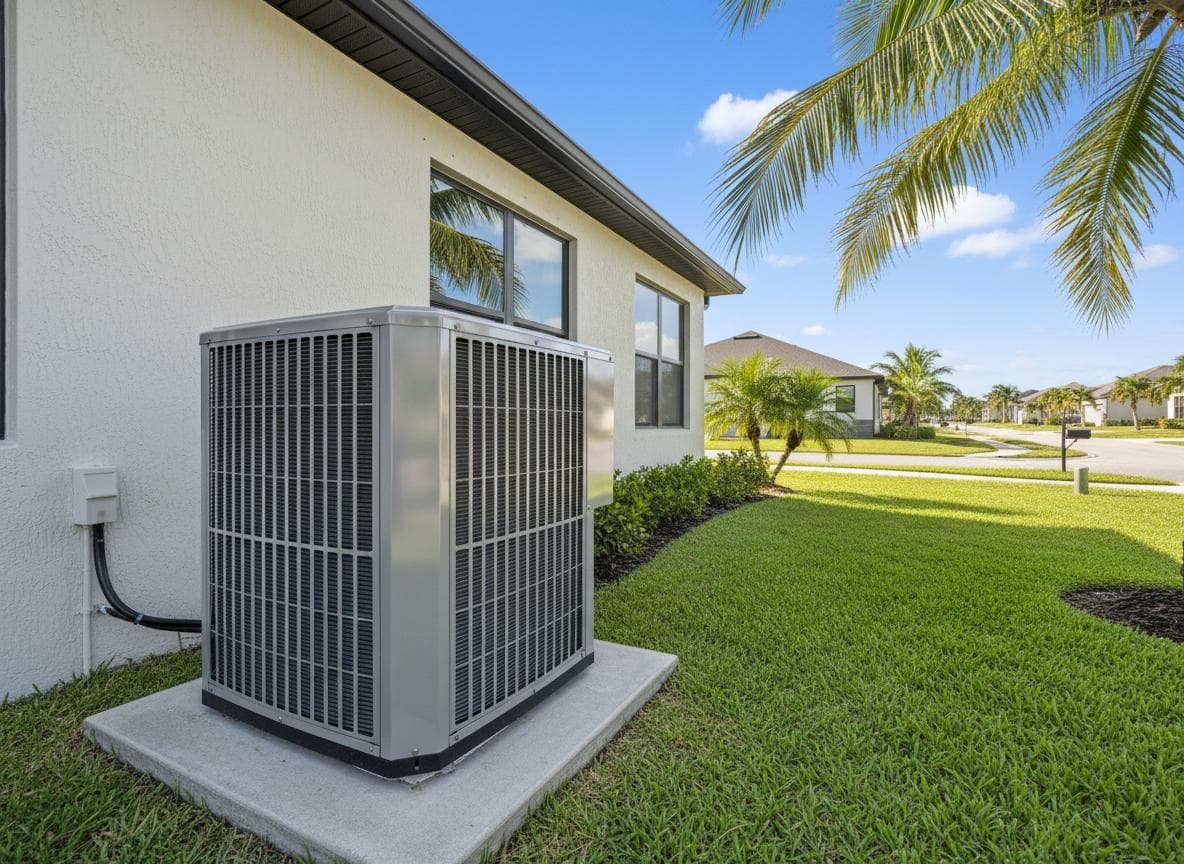
We don't use our heat much on the Treasure Coast, which is exactly why so many homeowners aren't sure how it works. Then a cold front comes through, the temperature drops into the 40s overnight, someone switches the thermostat to "Heat," and questions start.
Why does it smell like something's burning? Why is the outdoor unit running in heat mode? What is "Emergency Heat," and should I be using it?
Here's a plain-English guide to how most Florida homes stay warm.
Two Ways Florida Homes Make Heat
Most homes on the Treasure Coast use one or both of these:
1. A heat pump
A heat pump looks just like a regular air conditioner. In fact, it is one, with a special valve that lets it run in reverse. In cooling mode, it moves heat from inside your home to the outside. In heating mode, it pulls heat from the outdoor air and moves it inside.
Even when it feels cold, there's still heat energy in the outside air, and a heat pump can capture it efficiently. That's why heat pumps are so common in Florida: our winters are mild enough for them to work very well.
2. Electric heat strips
Heat strips (also called electric resistance heat or auxiliary heat) are coils inside your air handler that heat up like the elements in a toaster. Air blows across them and carries the heat into your home.
Some homes have heat strips only, paired with a straight air conditioner. Others have a heat pump with heat strips as backup.
Which One Is More Efficient?
The heat pump, by a wide margin, in most Florida conditions.
A heat pump moves heat rather than creating it, so it can deliver significantly more heat energy than the electricity it uses. Heat strips turn electricity directly into heat, one-for-one. That's why running on heat strips alone can make your electric bill jump during a cold snap.
What Are "Auxiliary Heat" and "Emergency Heat"?
These terms confuse a lot of homeowners, and they aren't the same thing.
Auxiliary heat (AUX) turns on automatically when the heat pump needs help. That might be when you raise the thermostat several degrees at once, during a defrost cycle, or on an unusually cold morning. Seeing "AUX" on your thermostat occasionally is normal.
Emergency heat (EM HEAT) is a manual setting that shuts off the heat pump completely and runs only the heat strips. It's meant for true emergencies, such as when the outdoor unit is damaged or has failed.
The bottom line: Don't use Emergency Heat as your normal setting. It works, but it can cost a lot more to run. If you find you need it, call for service.
Why Is My Outdoor Unit Steaming or Running in Winter?
That's usually normal. In heating mode, the outdoor coil gets cold, and on humid mornings moisture can collect or frost can form. The system periodically runs a defrost cycle to clear it. You may see steam rising from the unit and hear a whoosh when it switches over. That's normal.
What isn't normal: a thick block of ice that doesn't clear, or a unit that stays frozen for hours.
Get Your Heat Ready Before the First Cold Front
Because Florida heating systems sit unused for most of the year, it's smart to test them before you need them:
- • Set the thermostat to Heat and raise it a few degrees above room temperature.
- • Within a few minutes, you should feel warm air at the vents.
- • Expect a brief dusty or burning smell the first time. That's usually dust burning off the heat strips.
- • If the smell doesn't fade, or if you smell something electrical or see smoke, turn the system off and call for service.
- • Listen for unusual noises and make sure the outdoor unit starts if you have a heat pump.
A fall tune-up is the best time to have heating checked, including the reversing valve, defrost controls, heat strip elements and safety limits, and electrical connections.
Signs Your Heating Needs Service
- • Cold or lukewarm air in heat mode
- • The system is stuck on AUX constantly
- • The breaker trips when the heat comes on
- • A burning smell that doesn't go away after the first run
- • The outdoor unit stays iced over
- • Electric bills spike during mild cold weather
Frequently Asked Questions
Is a heat pump good for Florida?
Yes. Florida's mild winters are well suited to heat pumps, which heat efficiently by moving heat from the outdoor air into your home. Many homes also have backup heat strips for colder mornings.
What's the difference between auxiliary heat and emergency heat?
Auxiliary heat turns on automatically when your heat pump needs help. Emergency heat is a manual setting that turns off the heat pump and uses only electric heat strips. It should be used only if the heat pump isn't working.
Why is my electric bill so high when it gets cold?
If your system is relying heavily on heat strips, either because you don't have a heat pump, the heat pump isn't working properly, or Emergency Heat is on, your energy use can jump significantly.
Why is steam coming from my heat pump in winter?
It's usually a normal defrost cycle. The system melts frost from the outdoor coil, and the moisture evaporates as steam. It should clear within several minutes.
About the author
Scott Camire, Owner of A/C Advantage Inc.
Scott Camire is the founder of A/C Advantage Inc. in Port St. Lucie, Florida. He began his career in HVAC and commercial refrigeration in 1978 and founded A/C Advantage in 2006, building the company on what he calls “old fashioned service with modern technology.” A/C Advantage is a Florida Certified Mechanical Contractor (License #CMC1249807) with EPA-certified technicians, serving homes and businesses across the Treasure Coast and the Palm Beaches, including Port St. Lucie, Stuart, Palm City, Jensen Beach, Fort Pierce, Vero Beach, Sebastian, and Tradition.
Need help with your system?
Call A/C Advantage at (772) 336-7366. A live person answers 24 hours a day, 365 days a year. Or schedule service online.