
Residential Maintenance • 6 minutes
What a Real AC Tune-Up Should Include: A 48-Year HVAC Veteran's Checklist
By Scott Camire, Owner | A/C Advantage Inc. •
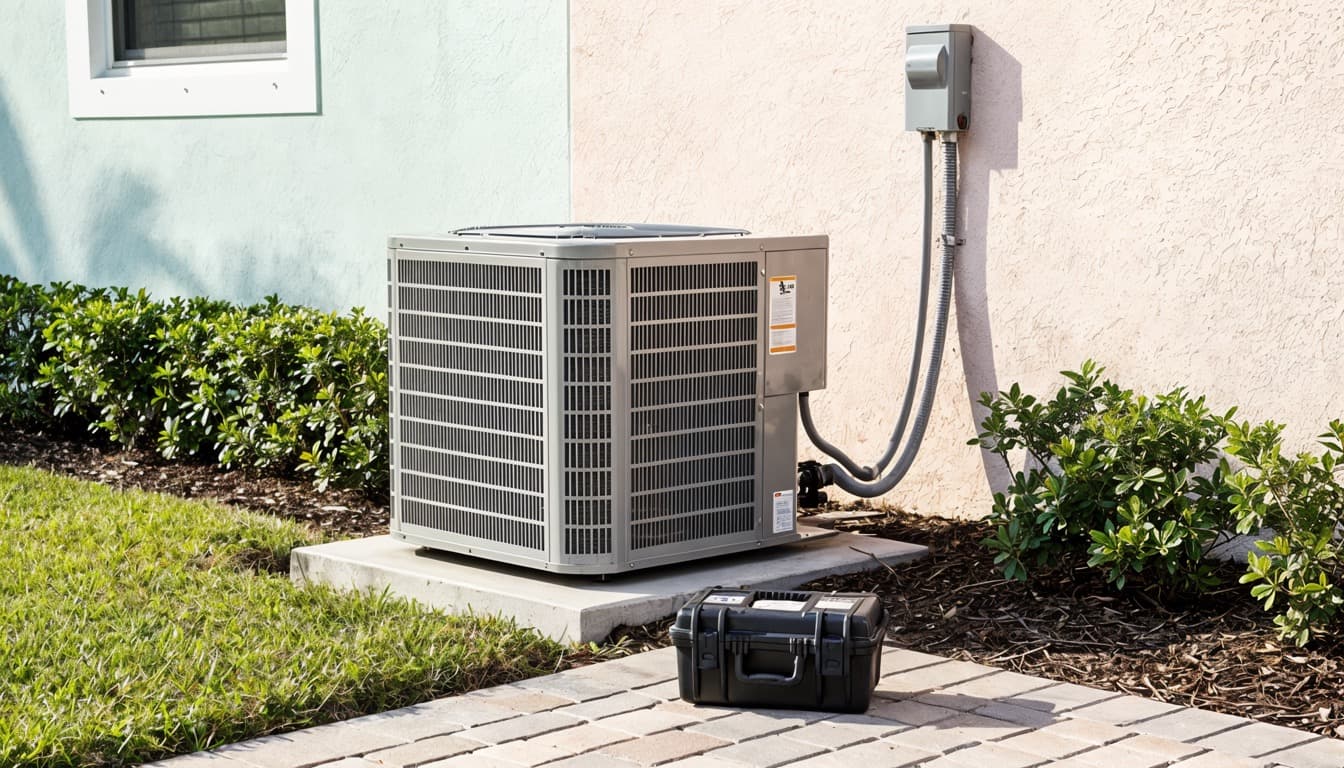
I started working on air conditioning and refrigeration equipment in 1978. In the years since, I've seen a lot of change in this industry: new refrigerants, smarter thermostats, more efficient equipment. One thing that hasn't changed is how many homeowners pay for a "tune-up" that turns out to be a quick look and a sales pitch.
A real tune-up takes time. It follows a checklist, it's documented, and when it's done you should understand the condition of your system. Here's what that looks like.
Why Tune-Ups Matter More in Florida
In most of the country, an air conditioner runs a few months a year. On the Treasure Coast, it can run 10 to 12 months a year and fight humidity the whole time. That constant workload is why regular maintenance makes such a difference here, and why most emergency breakdowns we see could have been caught earlier.
The Checklist: What a Real Tune-Up Includes
Indoor Unit (Air Handler)
- • Inspect and replace or clean the air filter. The simplest item, and the most commonly skipped by homeowners.
- • Inspect the evaporator coil for dirt, mold, and corrosion.
- • Clean and flush the condensate drain line and check the drain pan. In Florida, this matters more than almost anything else on the list.
- • Test the float switch or safety switch to make sure it will shut the system off before water overflows.
- • Inspect the blower motor and wheel. A dirty blower wheel cuts airflow and efficiency.
- • Check electrical connections for heat damage or looseness.
Outdoor Unit (Condenser)
- • Inspect and clean the condenser coil as needed.
- • Test the capacitor(s) with a meter. Capacitors are one of the most common failure parts in Florida heat, and a weak one can be spotted before it quits.
- • Inspect the contactor for pitting or burning.
- • Check the condenser fan motor and blade.
- • Look for corrosion, especially near the coast.
- • Confirm proper clearance around the unit.
System Performance
- • Measure refrigerant performance using pressures and temperatures, not just a glance at the gauges. A good technician checks superheat or subcooling against the manufacturer's specifications.
- • Measure the temperature split between return air and supply air.
- • Check amp draw on the compressor and motors and compare it to rated values.
- • Test thermostat operation and confirm the system cycles correctly.
- • Test the heating mode, especially on heat pump systems, before the first cold front.
Documentation
- • You should receive written findings. Not a verbal "everything looks good," but a record of what was checked, what was measured, and anything that needs attention. At A/C Advantage, we believe in written recommendations instead of verbal estimates, so you can make decisions on your own time.
Red Flags: When a Tune-Up Is Really a Sales Call
Most technicians are honest people who want to do good work. But there are some patterns worth watching for.
- • The visit takes 15 minutes. A complete tune-up on a residential system usually takes much longer than that.
- • Refrigerant is added without a leak explanation. A sealed system shouldn't lose refrigerant. If it's low, there's a leak, and topping it off every year just delays the problem.
- • Pressure to decide on the spot. "This price is only good today" is a sales tactic, not a diagnosis.
- • Everything is urgent. Some problems are urgent. Most can be planned.
- • No numbers. If they can't tell you what they measured, they may not have measured anything.
Questions to Ask Your Technician
- • What were my refrigerant readings compared to the manufacturer's specs?
- • How did my capacitor test compared to its rating?
- • Did you flush the drain line?
- • Is there anything I should budget for in the next year or two?
- • Can I get your findings in writing?
A good technician will be glad you asked.
How Often Should You Schedule a Tune-Up?
For most Treasure Coast homes, twice a year is the right answer: once in spring before the heavy cooling season and once in fall. Homes near the beach, homes with older systems, and rental or seasonal properties may need more attention.
A residential maintenance plan puts those visits on the calendar so you don't have to remember them, and it often includes priority service when the phones are ringing off the hook in August.
Frequently Asked Questions
How long should an AC tune-up take?
A complete residential tune-up usually takes an hour or more, depending on the system and what the technician finds. A visit that takes only 10 to 15 minutes is unlikely to cover everything on a full checklist.
Is an AC tune-up worth it in Florida?
Yes. Because AC systems in Florida run most of the year and deal with heavy humidity, regular tune-ups help prevent breakdowns, protect efficiency, reduce drain-line water damage, and extend equipment life.
Should my AC need refrigerant every year?
No. Air conditioners are sealed systems. If your system needs refrigerant, it has a leak, and the leak should be located and repaired rather than topped off year after year.
What's the difference between an AC tune-up and an AC inspection?
An inspection looks for problems. A tune-up includes inspection plus cleaning, testing, and adjustments, such as flushing the drain line, cleaning coils, and tightening electrical connections.
About the author
Scott Camire, Owner of A/C Advantage Inc.
Scott Camire is the founder of A/C Advantage Inc. in Port St. Lucie, Florida. He began his career in HVAC and commercial refrigeration in 1978 and founded A/C Advantage in 2006, building the company on what he calls “old fashioned service with modern technology.” A/C Advantage is a Florida Certified Mechanical Contractor (License #CMC1249807) with EPA-certified technicians, serving homes and businesses across the Treasure Coast and the Palm Beaches, including Port St. Lucie, Stuart, Palm City, Jensen Beach, Fort Pierce, Vero Beach, Sebastian, and Tradition.
Need help with your system?
Call A/C Advantage at (772) 336-7366. A live person answers 24 hours a day, 365 days a year. Or schedule service online.