Residential Maintenance • 6 minutes
What Does a Failing AC Capacitor Sound Like? Warning Signs Before a No-Cool Call
By Scott Camire, Owner | A/C Advantage Inc. •
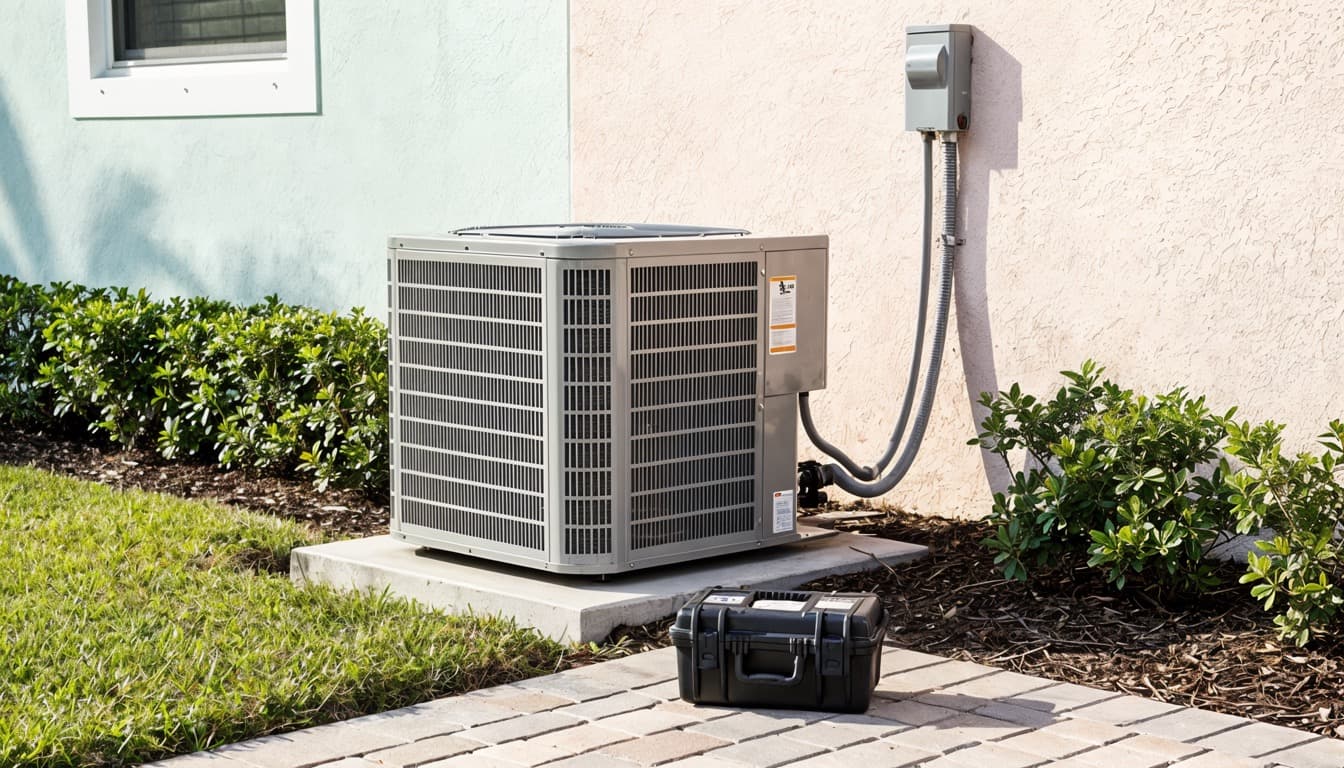
A capacitor is a small electrical component with an important job in many air-conditioning systems. It helps provide the electrical boost needed to start and run motors such as the compressor or outdoor fan. When a capacitor weakens or fails, an AC may struggle to start, run differently, or stop cooling altogether. It is often mentioned during a no-cool call, but sound alone cannot confirm that it is the problem.
Homeowners may hear a hum, click, buzz, or repeated attempt to start. Those sounds can also come from contactors, motors, loose parts, electrical connections, control issues, or other components. Treat them as a reason to observe safely and arrange diagnosis, not as instructions to open the unit.
Sounds worth taking seriously
A humming outdoor unit that does not start normally is one common warning sign. You may hear the thermostat call for cooling, then notice a low electrical hum without the familiar sound of the fan or compressor operating. In some cases, the unit may click and stop, or attempt to start more than once.
A loud buzzing can have several causes. If it is new, persistent, accompanied by reduced cooling, or different from the unit’s usual operating sound, write it down. Rattling is often a mechanical or panel issue rather than a capacitor, but an AC that is rattling and also failing to cool should not be dismissed. A shriek, grinding sound, or metal-on-metal noise may point to a motor or fan problem and calls for prompt attention.
Sound is only one clue. Look from a safe distance for whether the outdoor fan is turning, whether warm air is coming out of the top of the condenser, and whether the home’s supply airflow has changed. Do not put fingers, sticks, or tools through a grille to test a fan. A fan that is not moving can start unexpectedly, and the outdoor cabinet contains hazardous electrical components.
Other warning signs before a no-cool call
A failing capacitor may be associated with an AC that takes longer to start, starts and stops unusually, runs but does not cool effectively, or has an outdoor fan that intermittently fails. The thermostat may seem to work while the equipment outside does not respond normally. A rising indoor temperature on a day when the system is calling for cooling is a practical signal to investigate.
You may also notice that the breaker has tripped, the system makes a sharp electrical smell, or the outdoor cabinet feels unusually hot. These are not situations to solve by repeated resets. Turn the system off at the thermostat and contact a qualified technician. If you smell smoke or see signs of fire, move away from the equipment and use emergency services as appropriate.
Capacitors can weaken with age and operating stress, especially when equipment works hard in Florida heat. However, a technician needs to test the component and inspect the related electrical and motor conditions. Replacing the part without diagnosis may not solve the actual cause, and a failed motor can sometimes look like a capacitor issue at first.
Why capacitor replacement is not DIY
Even after power is removed, a capacitor can retain an electrical charge. Outdoor condensing units also contain high-voltage wiring, moving parts, and components that should be tested with appropriate instruments. Opening the cabinet, touching terminals, or trying to discharge a component without proper training can cause serious injury or equipment damage.
Avoid online “quick fixes” that suggest pushing a fan blade, jumping terminals, bypassing a control, or installing an arbitrary replacement. A capacitor has electrical specifications that must match the system’s requirements. More importantly, the underlying cause of the failure may be a worn motor, a damaged connection, abnormal voltage, or another issue that needs correction.
A homeowner can safely check the thermostat setting, replace a due filter, make sure debris is not crowding the outside unit, and note the behavior. If the outdoor equipment will not start, do not continue cycling it in hopes that it catches. Each unsuccessful attempt can add stress to electrical and motor components.
What to tell the technician
A clear description helps service move faster. Note the approximate time the trouble started, the thermostat temperature, whether the indoor blower runs, whether the outdoor fan turns, and any sounds or odors. Mention recent power interruptions, storms, work near the unit, or recurring trips. If you have photos or video taken safely from outside the equipment, they can be useful context.
The technician can check electrical readings, capacitor condition, contactors, wiring, motor operation, cooling performance, and other relevant equipment conditions. The right repair depends on the findings, not on one sound. Ask what was tested, what part failed if one is identified, and whether any related maintenance should be planned.
Because several faults can create similar starting symptoms, a technician may test the complete electrical and startup circuit rather than assume the capacitor is the only issue. That evaluation can include the power reaching the equipment, switching components, connections, and how the motor responds under normal operating conditions. Looking at the circuit as a whole helps identify a related fault that could otherwise leave the system unreliable after a single part is replaced.
A/C Advantage provides residential AC diagnosis across the Treasure Coast and Palm Beaches. If your system hums, clicks, or will not start normally, avoid electrical DIY and arrange qualified service before a small warning becomes a no-cool situation.
Related reading: Why Your AC Runs All Day in a Florida Summer, AC Drain Line Problems in Florida Homes, and How Often Should You Service Your AC in Florida?.
About the author
Scott Camire, Owner of A/C Advantage Inc.
Scott Camire is the founder of A/C Advantage Inc. in Port St. Lucie, Florida. He began his career in HVAC and commercial refrigeration in 1978 and founded A/C Advantage in 2006, building the company on what he calls “old fashioned service with modern technology.” A/C Advantage is a Florida Certified Mechanical Contractor (License #CMC1249807) with EPA-certified technicians, serving homes and businesses across the Treasure Coast and the Palm Beaches, including Port St. Lucie, Stuart, Palm City, Jensen Beach, Fort Pierce, Vero Beach, Sebastian, and Tradition.
Need help with your system?
Call A/C Advantage at (772) 336-7366. A live person answers 24 hours a day, 365 days a year. Or schedule service online.