Commercial Refrigeration • 5 minutes
Flu Season and Vaccine Storage: Refrigeration Checks for Medical Offices and Pharmacies
By Scott Camire, Owner | A/C Advantage Inc. •
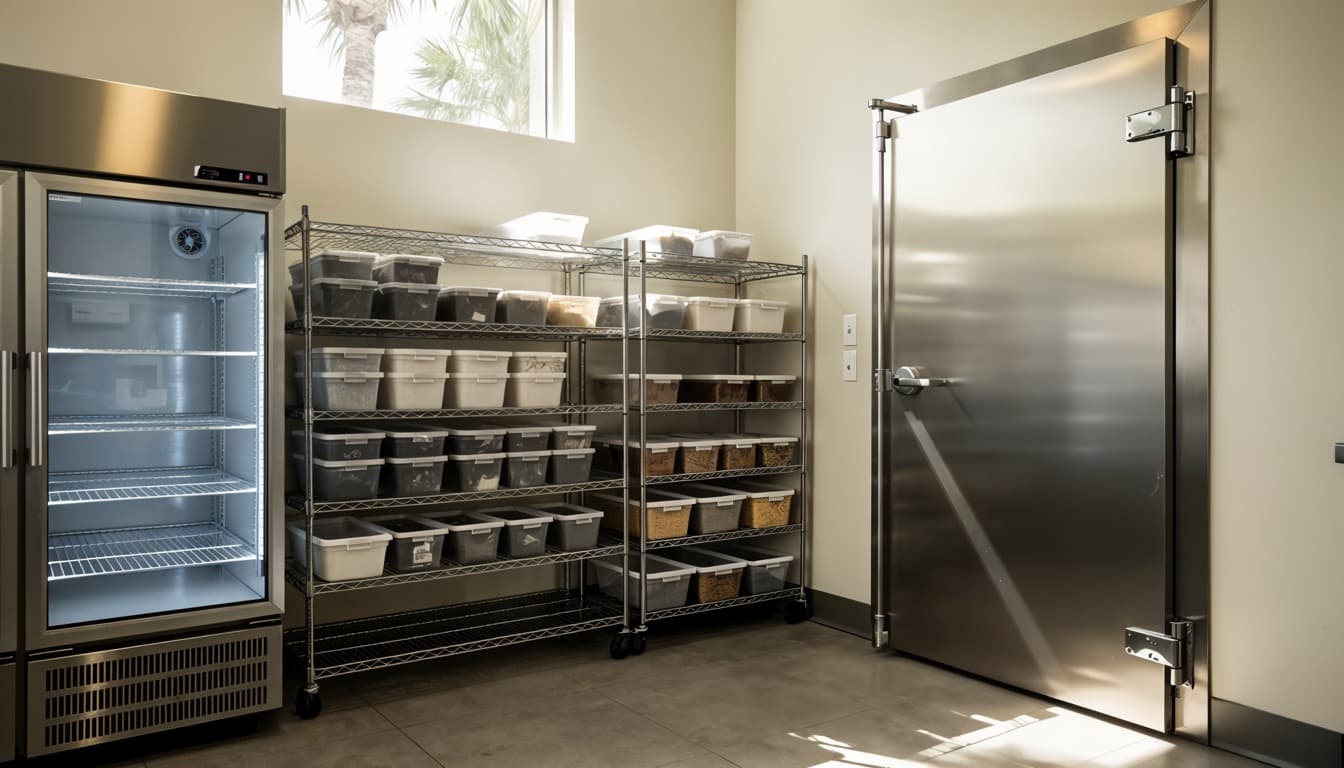
From October through the winter, medical offices, urgent care centers, and pharmacies across the Treasure Coast stock up on flu vaccines, and increasingly on other seasonal vaccines too. Refrigerators that sit half-empty in the summer are suddenly holding some of the most valuable, and most temperature-sensitive, inventory in the building.
A refrigeration failure in a restaurant costs product. A failure in a medical office can cost thousands of dollars in vaccines, disrupt patient schedules, and create reporting headaches. I've spent my career working on commercial refrigeration and HVAC, and the good news is that most of these failures give warning signs first. Here's what to watch.
Note: This article covers equipment and building systems. Always follow CDC guidance, your state health department, the vaccine manufacturer's instructions, and any program requirements such as Vaccines for Children (VFC) for storage and handling.
Know the Target Ranges
According to the CDC's Vaccine Storage and Handling Toolkit:
- • Refrigerated vaccines should be stored between 2°C and 8°C (36°F and 46°F).
- • Frozen vaccines should generally be stored between -50°C and -15°C (-58°F and +5°F), unless the manufacturer specifies otherwise.
Temperatures outside those ranges are called temperature excursions and need to be documented and handled according to your protocol.
Use the Right Equipment
The CDC recommends purpose-built or pharmaceutical-grade units designed for vaccine storage, or at minimum stand-alone refrigerators and freezers. It advises against dormitory-style or bar-style combination units for vaccine storage because they struggle to hold stable temperatures.
If your practice is still using an older household-style unit, flu season is a good time to plan an upgrade.
Watch the Room, Not Just the Refrigerator
Here's something many practice managers don't think about: the refrigerator is only as reliable as the space it sits in.
- • Room temperature matters. Most refrigeration equipment is designed to operate in a normal indoor environment. A supply closet that gets hot because the AC isn't reaching it makes the compressor work harder and can push temperatures out of range.
- • Airflow matters. Refrigerators and freezers need clearance around them to reject heat. Units pushed tight against walls or boxed in by shelving can overheat.
- • Your building's HVAC system is part of the plan. If your office AC is struggling, the equipment in the back room is struggling too.
Monthly Equipment Checks
Add these items to your office's routine:
- • Condenser coils: Dust buildup on the coil is one of the most common causes of poor performance. Many units need coils cleaned periodically.
- • Door seals: Look for cracks, gaps, or seals that don't grip. A weak seal lets warm, humid Florida air in.
- • Door closing: Make sure doors close fully on their own and aren't blocked by overfilled shelves.
- • Noise and run time: A unit that runs constantly, or starts making new noises, needs a look.
- • Frost buildup: Heavy frost in a freezer can indicate a seal or defrost problem.
- • Power: Confirm the unit is on a dedicated outlet and that the plug can't be bumped or switched off by accident.
Monitoring and Alarms
The CDC recommends using a digital data logger (DDL) with a buffered probe and reviewing minimum and maximum temperatures at the start of each workday. Many practices go a step further with remote alarms that send a text or call when temperatures drift, which is especially valuable overnight and on weekends.
Remote alerts don't fix anything, but they give you time to move product or call for service before an excursion becomes a loss.
Have a Plan for Power Outages and Breakdowns
Florida's hurricane season runs through November 30, and afternoon storms can knock out power at any time. Your emergency plan should include:
- • A written procedure for moving vaccines to a backup location
- • Properly conditioned coolers or transport containers and the supplies needed to pack them
- • Who has keys and after-hours access
- • Generator coverage, if available, and a schedule for testing it
- • The phone number of your refrigeration service company
A/C Advantage answers (772) 336-7366 with a live person 24 hours a day, 365 days a year, because refrigeration problems don't wait for business hours.
Why a Maintenance Contract Makes Sense for Healthcare
Medical offices benefit from the same thing restaurants do: planned visits, written findings, and priority response. A maintenance contract that covers both your building's HVAC and your refrigeration equipment means one team knows your whole system, from the rooftop unit to the vaccine fridge in the back.
Frequently Asked Questions
What temperature should a vaccine refrigerator be?
The CDC recommends storing refrigerated vaccines between 2°C and 8°C (36°F and 46°F). Always follow manufacturer instructions and any program-specific requirements.
Can a medical office use a regular household refrigerator for vaccines?
The CDC recommends purpose-built or pharmaceutical-grade units, or stand-alone refrigerators, and advises against dormitory-style or bar-style combination units. Check with your state health department and any vaccine program you participate in for specific requirements.
What causes vaccine refrigerator temperature problems?
Common causes include dirty condenser coils, worn door seals, doors left ajar, overpacking, poor airflow around the unit, a hot room, and failing components such as fans or compressors.
What should we do if our vaccine refrigerator fails after hours?
Follow your written emergency plan: keep the door closed, document the temperatures, move vaccines to a backup unit or properly prepared transport container if needed, contact your vaccine program or manufacturer for guidance, and call a refrigeration technician.
About the author
Scott Camire, Owner of A/C Advantage Inc.
Scott Camire is the founder of A/C Advantage Inc. in Port St. Lucie, Florida. He began his career in HVAC and commercial refrigeration in 1978 and founded A/C Advantage in 2006, building the company on what he calls “old fashioned service with modern technology.” A/C Advantage is a Florida Certified Mechanical Contractor (License #CMC1249807) with EPA-certified technicians, serving homes and businesses across the Treasure Coast and the Palm Beaches, including Port St. Lucie, Stuart, Palm City, Jensen Beach, Fort Pierce, Vero Beach, Sebastian, and Tradition.
Need help with your system?
Call A/C Advantage at (772) 336-7366. A live person answers 24 hours a day, 365 days a year. Or schedule service online.