Commercial Refrigeration • 6 minutes
Pre-Storm Commercial Refrigeration Checklist for Restaurants, Retail, and Medical Storage
By Scott Camire, Owner | A/C Advantage Inc. •
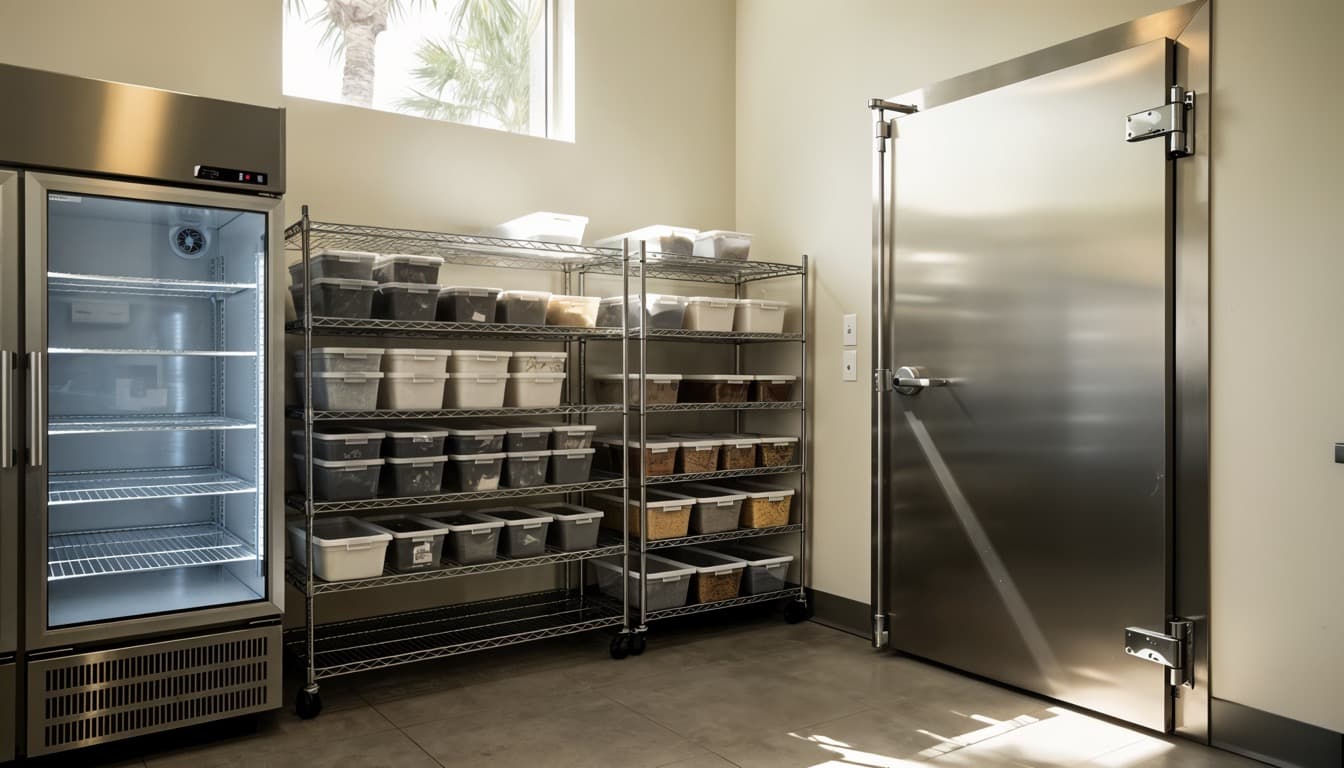
Florida storm preparation is not only about windows, generators, and a plan to close the building. For a restaurant, grocer, convenience store, pharmacy, or facility with temperature-sensitive materials, refrigeration deserves its own written checklist. A walk-in, reach-in, ice machine, display case, or medication refrigerator depends on power, airflow, controls, doors, and regular operating conditions. A storm can interrupt several of those at once.
The goal is not to promise that equipment or inventory will be unaffected. It is to reduce avoidable risks, document conditions before the weather changes, and make recovery more orderly when it is safe to return. Assign one person to own the checklist, keep the equipment manual and service contacts accessible, and tailor the steps to the equipment and products in your building.
Start with equipment condition, not the forecast
Do not wait until a watch or warning to notice an existing refrigeration problem. In the days before severe weather is possible, walk the facility and record the normal temperature shown on every critical unit. Note unusual alarms, water around equipment, ice buildup, repeated cycling, damaged door gaskets, loud fans, or a compressor area that seems unusually hot. Photograph the display if a digital controller is reporting an issue.
Check that condenser areas are not crowded with boxes, trash, or stored supplies. Refrigeration equipment must move air to reject heat. Cleaning and service work that require access to electrical parts, refrigerant components, or coils should be handled by a qualified technician rather than rushed by staff before a storm.
For walk-ins and reach-ins, inspect the simple operational items your team can safely see: doors should close fully, shelves should allow circulation, and product should not block interior evaporator airflow. Keep cartons off the floor where practical and organize high-value or most-sensitive inventory so it can be located quickly later.
Confirm your power-loss plan
A generator can be valuable, but it is not a refrigeration plan by itself. Confirm which circuits it can support, how much starting and running load the equipment requires, and what other building systems share those circuits. A licensed electrician or generator provider should answer capacity and connection questions; do not improvise temporary wiring or back-feed a building.
If a generator is part of the plan, test it according to its manufacturer instructions before storm conditions arrive. Confirm fuel arrangements, safe outdoor placement, and who is authorized to operate it. Make sure staff know that a generator must never run indoors or near openings where exhaust can enter the building.
Where backup power is not available, prioritize keeping doors closed and monitoring conditions. A cooler that is repeatedly opened loses cold air quickly. Put paper signs or a staff notice in place before closing so no one opens a walk-in simply to check on it. If local conditions permit and your continuity plan calls for it, identify an approved alternative storage location in advance rather than making that decision during an outage.
Protect the building and the equipment
Before leaving, close and secure exterior openings and move loose items away from outdoor condensers, rooftop access areas, and building intakes. Do not wrap outdoor condensing equipment in plastic or other material that could trap moisture or create a hazard. Clear loose debris from around accessible ground-level equipment without reaching into fans or electrical compartments.
Inside, make sure drain pans, floor drains, and nearby areas are free of stored items that could worsen a water event. Elevate paper records and small electronic accessories where appropriate. If you discover water, electrical damage, a damaged refrigerant line, or an unsafe condition, keep people clear and call the appropriate qualified professional when conditions allow.
Create a simple shutdown and restart record: the time each unit was last observed, its displayed temperature, whether it was operating normally, and who completed the check. This record helps a service technician distinguish a post-storm failure from a condition that was already developing.
Make inventory decisions with the right authority
Equipment guidance and food-safety decisions are not the same thing. An HVAC or refrigeration contractor can inspect and repair equipment, but cannot determine whether food, medication, vaccines, or regulated products are acceptable for use after a temperature excursion. Follow your company’s written policy, product manufacturer requirements, insurer guidance, and applicable local or state health authority direction. For medical products, contact the manufacturer, pharmacist, or responsible clinical authority as applicable.
During an outage, document actual temperatures and time ranges as accurately as you can without unnecessarily opening doors. Keep temperature logs, alarm records, and receipts available. If staff are unsure about a product’s status, treat it as a decision for the responsible food-safety or product authority, not a guess based on how cold the room feels.
Return safely and restart deliberately
After the storm, do not rush onto a damaged property. Follow local emergency guidance, wait until travel and the site are safe, and look for standing water, damaged electrical service, roof damage, or debris before restoring normal operation. If the building has been flooded or electrical equipment was exposed to water, have it assessed by the appropriate professional.
When power is available, check each unit’s controller, temperature trend, doors, lights, fans, drains, and alarms. Listen for unusual sounds but do not open panels or reset breakers repeatedly. Record what you find. A unit that does not pull down, trips a breaker, leaks water, has ice where it should not, or shows an alarm should be taken seriously before more product is loaded.
A/C Advantage helps Treasure Coast and Palm Beach businesses diagnose commercial refrigeration problems and plan maintenance before weather adds pressure. If a unit has warning signs before a storm or does not return to normal operation afterward, contact a qualified refrigeration professional for an assessment.
Related reading: Commercial Refrigeration Uptime Guide, Walk-in Cooler Temperature Problems, and Restaurant Refrigeration Maintenance Contracts.
About the author
Scott Camire, Owner of A/C Advantage Inc.
Scott Camire is the founder of A/C Advantage Inc. in Port St. Lucie, Florida. He began his career in HVAC and commercial refrigeration in 1978 and founded A/C Advantage in 2006, building the company on what he calls “old fashioned service with modern technology.” A/C Advantage is a Florida Certified Mechanical Contractor (License #CMC1249807) with EPA-certified technicians, serving homes and businesses across the Treasure Coast and the Palm Beaches, including Port St. Lucie, Stuart, Palm City, Jensen Beach, Fort Pierce, Vero Beach, Sebastian, and Tradition.
Need help with your system?
Call A/C Advantage at (772) 336-7366. A live person answers 24 hours a day, 365 days a year. Or schedule service online.