Residential Replacement • 5 minutes
Why Fall Is the Smartest Time to Replace Your AC in Florida
By Scott Camire, Owner | A/C Advantage Inc. •
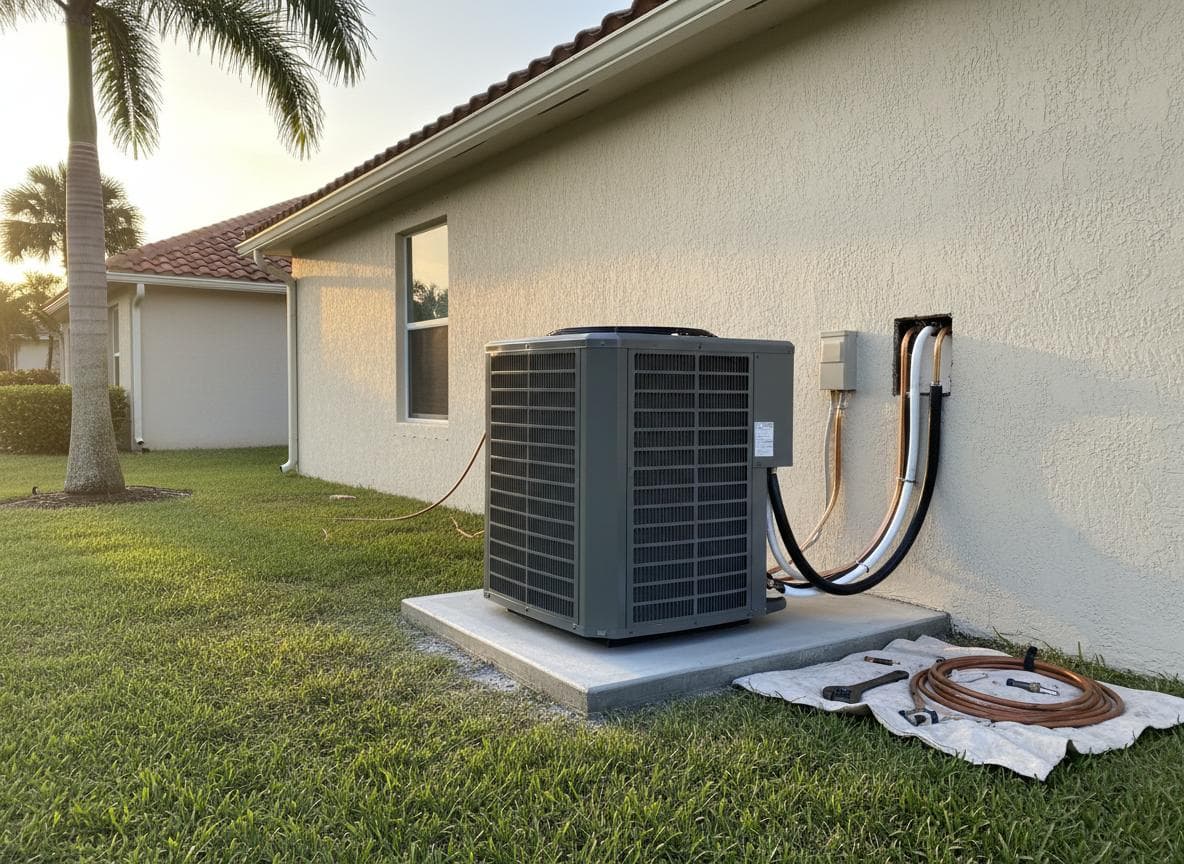
Most air conditioners on the Treasure Coast get replaced in July or August, and almost always for the same reason: the old system quit on a 95-degree day. That's the worst possible way to buy a new system. You're hot, you're in a hurry, every contractor is busy, and you don't have time to compare options.
If your system is aging, having repeated problems, or struggling to keep up, fall is the time to plan the replacement. Here's why.
1. You're Not Making a Decision Under Pressure
When your AC is down in August, you'll take the first installation date you can get. In October or November, you can get two or three written proposals, ask questions, check reviews, and decide what's right for your home without sweating through it.
In my experience, homeowners who replace on their own schedule make better choices about equipment size, efficiency, and features than those replacing in an emergency.
2. Installation Scheduling Is More Flexible
Fall and winter are typically slower for HVAC installation in South Florida. That means more flexibility on dates, more time to plan any ductwork, electrical, or platform work, and a less rushed job overall.
3. Your Home Stays Comfortable During the Changeover
A typical residential replacement usually takes a day, sometimes longer if ductwork or other upgrades are involved. In October or November, a day without AC is an inconvenience. In August, it can be miserable and even unsafe for older family members and pets.
4. You Get Ahead of Next Summer's Breakdown
Many aging systems limp through the fall and winter because they aren't working very hard. Then they fail during the first real heat of May or June. If your technician has told you the system is near the end, the calm months are your chance to act first.
5. You Have Time to Get the Details Right
A new system is only as good as the design and installation behind it. Planning ahead gives you time to cover the things that get skipped in a rush:
- • Proper sizing. In Florida, an oversized system cools the air quickly but doesn't run long enough to remove humidity, leaving the house cool and clammy. A load calculation, not a guess based on the old unit, should determine size.
- • Ductwork evaluation. A new system connected to leaky or undersized ducts won't deliver what it promises.
- • Refrigerant type. New systems now use newer, lower-impact refrigerants. Ask your contractor which one your system uses and what it means for future service.
- • Efficiency rating. Higher-efficiency equipment costs more upfront but can lower monthly bills significantly in a climate where the AC runs most of the year.
- • Humidity control. Variable-speed and two-stage systems can do a much better job managing humidity.
- • Coastal protection. If you live near the water, ask about corrosion-resistant coatings or coil options.
Signs Your AC Is Nearing Replacement
- • The system is 12 to 15 years old or older
- • You've had multiple repairs in the last two years
- • Your energy bills keep climbing even with regular maintenance
- • The house won't stay comfortable or humidity stays high
- • The system has a significant refrigerant leak or a failing compressor
- • Repair quotes are starting to approach a meaningful share of replacement cost
None of these alone means you need a new system. A trusted technician should be able to show you, in writing, why a repair or replacement makes sense.
What to Ask Before You Sign
- • Did you perform a load calculation for my home?
- • What refrigerant does this system use?
- • What's the efficiency rating, and what does that mean for my bill?
- • What's included: permits, disposal, new pad, drain line, thermostat?
- • What warranties come with the equipment and the labor, and do I need to register the equipment?
- • What financing options are available?
Let's Plan Your Replacement Now
If your system has been giving you trouble, call us this fall for an honest evaluation. We'll give you written recommendations, including whether a repair still makes sense, so you can decide on your own timeline. Financing options are available for qualified homeowners.
Frequently Asked Questions
What is the best month to replace an air conditioner in Florida?
On the Treasure Coast, October through February is generally the best time to replace an AC. Demand is lower, scheduling is more flexible, and going without cooling for a day is far less disruptive than in summer.
How long does an AC replacement take?
A straightforward residential replacement usually takes one day. Jobs that include ductwork changes, electrical upgrades, or relocating equipment can take longer.
How long does an AC last in Florida?
Because systems run most of the year in heat, humidity, and in some areas salt air, many Florida air conditioners last roughly 10 to 15 years. Regular maintenance and a quality installation can help a system reach the upper end of that range.
Should I replace my air handler and condenser at the same time?
In most cases, yes. Matched indoor and outdoor components are designed to work together, and mismatched systems can lose efficiency, reliability, and in some cases warranty coverage. Your contractor should explain the options for your specific equipment.
About the author
Scott Camire, Owner of A/C Advantage Inc.
Scott Camire is the founder of A/C Advantage Inc. in Port St. Lucie, Florida. He began his career in HVAC and commercial refrigeration in 1978 and founded A/C Advantage in 2006, building the company on what he calls “old fashioned service with modern technology.” A/C Advantage is a Florida Certified Mechanical Contractor (License #CMC1249807) with EPA-certified technicians, serving homes and businesses across the Treasure Coast and the Palm Beaches, including Port St. Lucie, Stuart, Palm City, Jensen Beach, Fort Pierce, Vero Beach, Sebastian, and Tradition.
Need help with your system?
Call A/C Advantage at (772) 336-7366. A live person answers 24 hours a day, 365 days a year. Or schedule service online.