Commercial HVAC • 5 minutes
2027 HVAC Budget Planning for Property Managers and Business Owners
By Scott Camire, Owner | A/C Advantage Inc. •
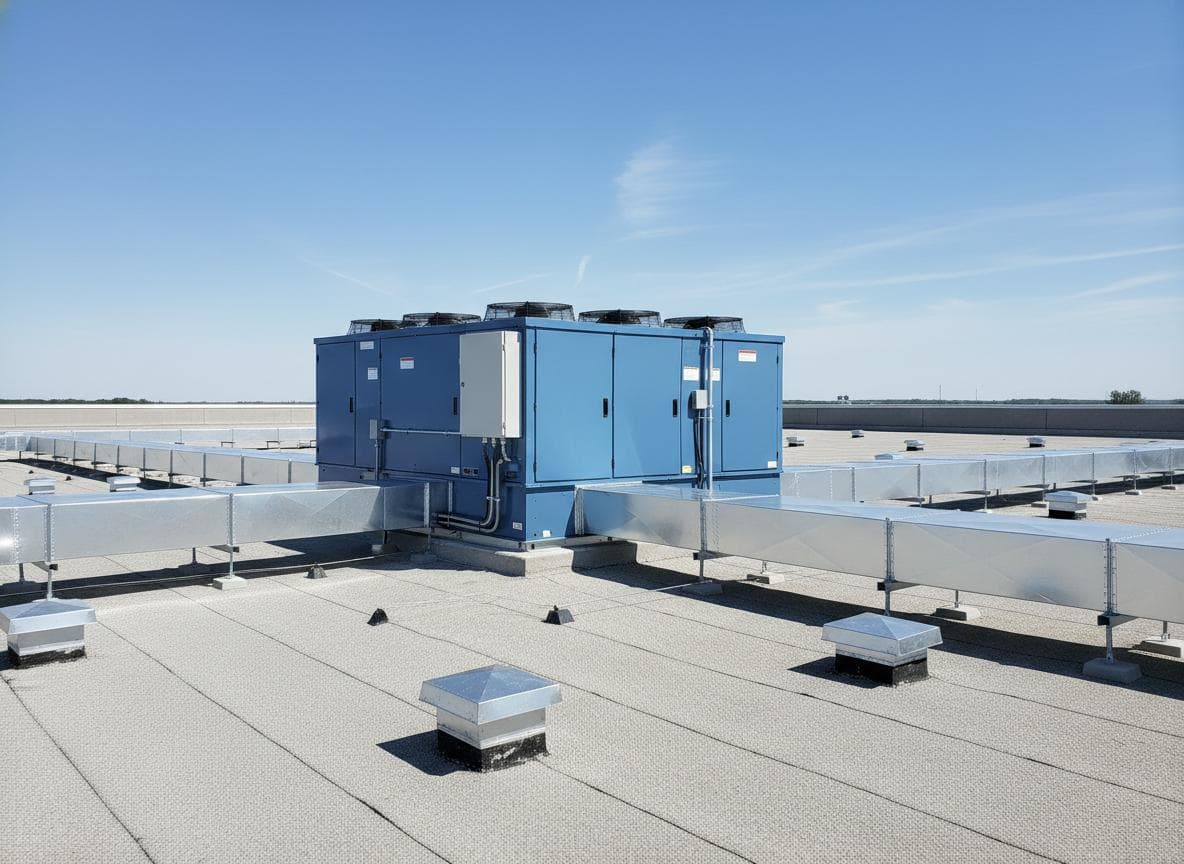
Fourth quarter is budget season. For property managers, facility managers, and business owners on the Treasure Coast, HVAC and refrigeration are usually some of the biggest and least predictable lines in the operating budget.
The problem is that most HVAC spending is reactive. A rooftop unit fails in July, a walk-in compressor goes out on a holiday weekend, and the money comes from wherever it can be found. After working on commercial systems since 1978, I can tell you that the businesses with the fewest surprises are the ones that plan a year ahead.
Here's a practical framework for building your 2027 HVAC budget.
Step 1: Build (or Update) Your Equipment Inventory
You can't budget for what you haven't listed. For every HVAC and refrigeration unit, record:
- • Location (rooftop, mechanical room, suite number)
- • Make, model, and serial number
- • Tonnage or capacity
- • Installation date or approximate age
- • Refrigerant type
- • Repair history over the last two to three years
- • Current condition notes from your last maintenance visit
If you don't have this information, your maintenance contractor should be able to help build it. At A/C Advantage, we provide written findings after maintenance visits, which makes this step much easier.
Step 2: Sort Equipment Into Three Groups
Once you have the inventory, sort each unit into one of three categories:
- • Healthy: Newer equipment with a clean repair history. Budget for routine maintenance only.
- • Watch list: Mid-life equipment with some repairs, rising energy use, or known issues such as coil corrosion or minor leaks. Budget for maintenance plus a repair allowance.
- • Replacement candidates: Older equipment with major repairs, recurring failures, refrigerant leaks, or obsolete parts. Budget for planned replacement in the next 12 to 24 months.
In Florida's climate, especially near the coast, commercial rooftop units often have a shorter life than the national averages you'll see online. Salt air, heat, and year-round runtime all take a toll.
Step 3: Separate Operating and Capital Costs
Keep your budget clean by separating:
Operating expenses
- • Preventive maintenance contracts
- • Filters, belts, and routine parts
- • Coil cleaning
- • Minor repairs
- • Emergency service allowance
Capital expenses
- • Equipment replacements
- • Major component replacements, such as compressors
- • System upgrades, controls, or energy improvements
- • Refrigeration system replacements
Talk with your tax advisor about how HVAC improvements are treated. Depending on your property type and situation, provisions such as Section 179 expensing or bonus depreciation may apply to qualifying HVAC equipment. The rules change and depend on your circumstances, so get professional tax guidance before assuming a deduction.
Step 4: Build in an Emergency Allowance
Even well-maintained equipment fails. A reasonable emergency allowance keeps a single breakdown from wrecking the rest of your budget. Base it on your actual repair history and the age of your equipment. Older portfolios need a bigger cushion.
Step 5: Plan Replacements for the Right Time of Year
If you know a unit needs replacement, schedule it for the cooler months, roughly November through March on the Treasure Coast. Benefits include:
- • Less disruption to tenants, employees, and customers
- • More flexible scheduling for crane lifts and roof work
- • Time to handle permits and equipment lead times
- • Avoiding an emergency replacement at peak-season prices in August
Remember that newer equipment uses newer refrigerants. Ask your contractor how that affects replacement planning, especially if you have a mix of older and newer units.
Step 6: Use Maintenance to Protect the Budget
Preventive maintenance is the most controllable line in your HVAC budget, and it has the biggest effect on everything else. Regular maintenance helps:
- • Reduce emergency calls and after-hours charges
- • Extend equipment life so capital spending can be planned
- • Lower energy consumption
- • Provide documentation that supports warranty claims and capital requests
Our team has found that most emergency failures are preventable with proper maintenance. For a property manager, that difference shows up in fewer tenant complaints and fewer surprise invoices.
A Simple Budget Checklist
- • Equipment inventory complete and up to date
- • Each unit sorted: healthy, watch list, or replacement candidate
- • Maintenance contract cost confirmed for 2027
- • Repair allowance based on actual history
- • Emergency allowance set aside
- • Replacement projects scheduled for cooler months
- • Tax treatment reviewed with your advisor
- • Written condition report from your HVAC contractor on file
Frequently Asked Questions
How much should a business budget for HVAC maintenance?
It depends on the number, size, age, and type of units, along with how hard they run. The most accurate approach is to base the budget on a current equipment inventory, a maintenance contract quote, and your actual repair history.
How long do commercial rooftop units last in Florida?
Many commercial rooftop units last roughly 12 to 20 years, but Florida heat, humidity, salt air, and year-round operation can shorten that. Maintenance history and installation quality make a big difference.
When is the best time to replace commercial HVAC equipment in Florida?
The cooler months, roughly November through March, are usually best. Cooling demand is lower, scheduling is easier, and there's less disruption to occupants.
What should be included in a commercial HVAC condition report?
A good report lists each unit with its age, condition, measured readings, deficiencies found, recommended repairs, and a realistic outlook for remaining life, in writing, so you can use it for budgeting.
About the author
Scott Camire, Owner of A/C Advantage Inc.
Scott Camire is the founder of A/C Advantage Inc. in Port St. Lucie, Florida. He began his career in HVAC and commercial refrigeration in 1978 and founded A/C Advantage in 2006, building the company on what he calls “old fashioned service with modern technology.” A/C Advantage is a Florida Certified Mechanical Contractor (License #CMC1249807) with EPA-certified technicians, serving homes and businesses across the Treasure Coast and the Palm Beaches, including Port St. Lucie, Stuart, Palm City, Jensen Beach, Fort Pierce, Vero Beach, Sebastian, and Tradition.
Need help with your system?
Call A/C Advantage at (772) 336-7366. A live person answers 24 hours a day, 365 days a year. Or schedule service online.