Commercial HVAC • 7 minutes
What Should Be Included in a Commercial HVAC Maintenance Report?
By Scott Camire, Owner | A/C Advantage Inc. •
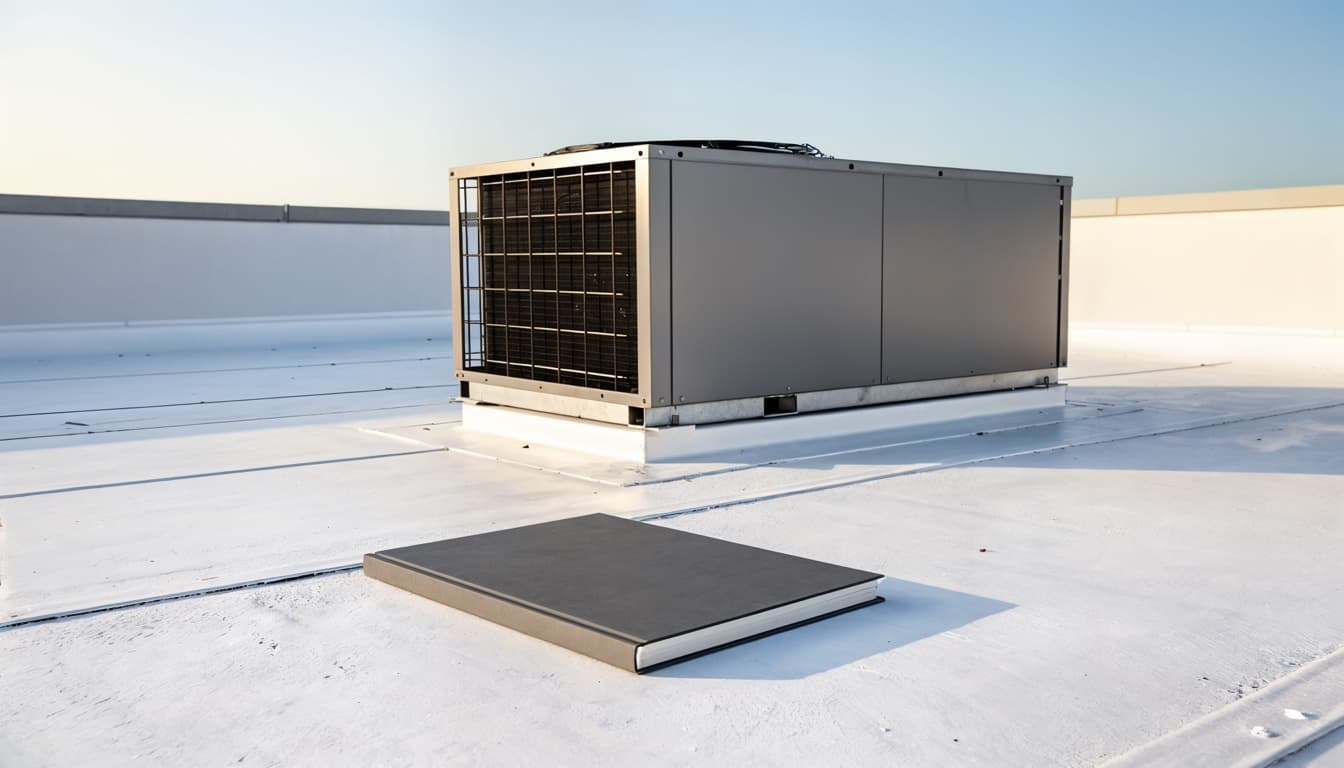
A maintenance visit is only as useful as the record it leaves behind. Commercial HVAC equipment may be out of sight on a roof, above a ceiling, or behind a locked mechanical-room door, but it affects tenants, employees, customers, inventory, and operating costs every day. A report turns a service visit into information a property manager can use.
A good report should not be a vague line that says “unit checked.” It should identify what equipment was serviced, what the technician observed, what work was completed, what needs attention, and how urgent the next decision is. That gives the manager a history to compare from one visit to the next.
Start With Clear Equipment Identification
Every report should name the property, service date, technician, and each unit inspected. For rooftop units, that means the unit tag or location, manufacturer and model information when available, serial number, and the area served. “RTU 3, north roof, serves Suite 210” is far more useful than “checked roof unit.”
Clear identification prevents a common problem: notes for one unit being mistaken for another. It also helps when a manager is reviewing repeated repairs, warranty questions, budgeting, or a comfort complaint from a particular suite.
The report should state the reason for the visit: scheduled preventive maintenance, a no-cool call, tenant comfort issue, water complaint, follow-up, or seasonal inspection. Routine maintenance and a troubleshooting call are not the same thing, and the report should make that plain.
What Was Inspected and Serviced
The checklist should show the work actually performed. Depending on the equipment, that may include filters, belts, blower components, outdoor and indoor coils, condensate pan and drain, electrical connections, contactors, capacitors, disconnect condition, thermostat or building controls, economizer operation where installed, and visible cabinet or curb condition.
A useful report also records operating observations rather than simply checking boxes. Examples include supply and return air temperature, indoor comfort concern, unusual noise, vibration, airflow condition, visible corrosion, drain condition, and whether the unit operated through a test cycle. Readings should be meaningful to the unit and visit; they are not a substitute for diagnosis, but they establish a baseline.
Refrigerant circuit work, electrical testing, and repairs belong in the hands of trained technicians. A property manager does not need to interpret every number. The report should translate the finding into an understandable condition and recommended action.
Filters, Drains, and Coils Need Specific Notes
These routine items can cause expensive problems when they are treated as an afterthought. The report should say filter size, quantity, condition, and whether filters were replaced or left in place. If access, stocking, or an unusual filter size is delaying the work, that should be stated.
For drains, the report should note whether the pan and line were inspected, whether flow was confirmed where appropriate, and whether there was debris, standing water, staining, or signs of a prior overflow. Water around a rooftop unit can also involve the roof, curb, or flashing, so the source should not be assumed without investigation.
For coils, record visible dirt buildup, bent fins, corrosion, restricted airflow, or cleaning performed. Florida heat, rain, coastal air, and debris can be tough on outdoor equipment. That is why our Rooftop Unit Maintenance Checklist is a useful companion for managers building a service schedule.
Deficiencies Should Be Ranked by Priority
The best reports separate a completed maintenance task from a deficiency. Each deficiency should explain the issue, its likely consequence, and recommended next step. It should also indicate priority:
- • Urgent: a condition affecting safety, creating active water risk, causing a shutdown, or likely to interrupt critical operations.
- • Repair soon: a condition that is not an immediate shutdown but is likely to worsen, affect comfort, or lead to a larger failure.
- • Monitor or plan: wear, age, corrosion, or performance trends that should be revisited and included in future budgeting.
Photos can be helpful when they clearly show the condition, unit tag, or location. A photo without context is less useful than a short explanation of what is shown and why it matters.
Include Repairs, Parts, and Open Items
If a repair was completed, the report should identify the work and parts used in plain terms. If a repair was recommended but not authorized, that needs to be visible too. Open items should not disappear into the next visit.
Managers also benefit from a note about operational impact: Is the unit running normally? Is there a temporary measure in place? Does a suite need access coordinated? Is a roof access escort needed? Is a follow-up date recommended? Those details help prevent a good technical visit from becoming a scheduling problem.
Use the Report as a Planning Tool
One report is a snapshot. Several reports reveal patterns. Repeated belt wear, drain backups, compressor trips, corrosion, or complaints from one zone may point to an underlying issue rather than unrelated repairs. Keep reports by unit and review them before budget season or lease turnover.
A maintenance report should support—not replace—good communication. If a finding is urgent or expensive, ask for the technician or service manager to explain the options, risk of waiting, and whether a repair, control adjustment, or replacement plan is appropriate. See our Commercial Rooftop HVAC Guide for the larger planning picture.
A/C Advantage can provide commercial HVAC maintenance with documented findings and straightforward next steps. If your reports do not tell you what was done, what is at risk, and what should happen next, it is time to ask for a better record.
About the author
Scott Camire, Owner of A/C Advantage Inc.
Scott Camire is the founder of A/C Advantage Inc. in Port St. Lucie, Florida. He began his career in HVAC and commercial refrigeration in 1978 and founded A/C Advantage in 2006, building the company on what he calls “old fashioned service with modern technology.” A/C Advantage is a Florida Certified Mechanical Contractor (License #CMC1249807) with EPA-certified technicians, serving homes and businesses across the Treasure Coast and the Palm Beaches, including Port St. Lucie, Stuart, Palm City, Jensen Beach, Fort Pierce, Vero Beach, Sebastian, and Tradition.
Need help with your system?
Call A/C Advantage at (772) 336-7366. A live person answers 24 hours a day, 365 days a year. Or schedule service online.