Residential AC Repair • 7 minutes
When Is an AC Problem an Emergency? A Florida Homeowner’s Guide
By Scott Camire, Owner | A/C Advantage Inc. •
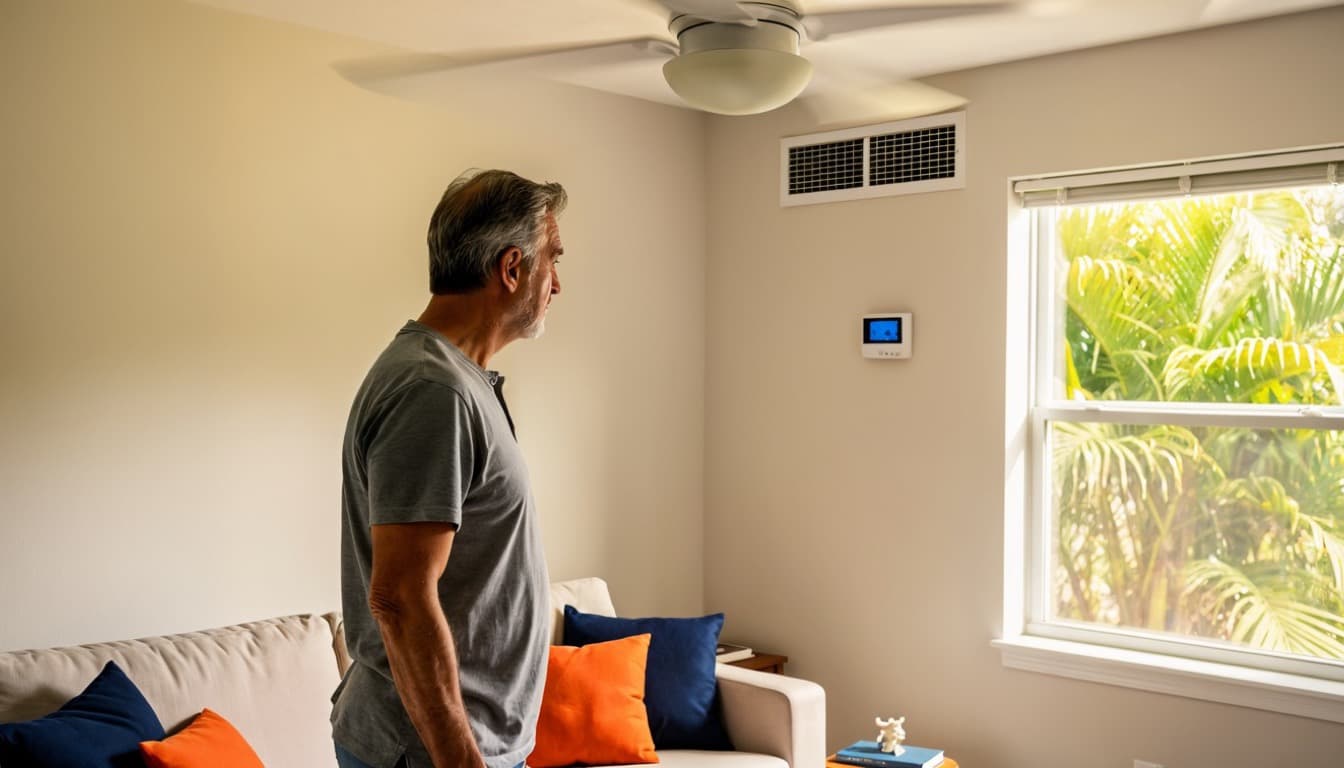
A Florida air conditioner that stops cooling is never convenient. In the middle of summer, it can turn a house uncomfortable quickly. But not every no-cool call has the same urgency, and knowing the difference helps you protect people, your home, and the equipment without taking unsafe shortcuts.
An AC emergency is not defined only by the temperature on the thermostat. It is defined by safety, vulnerable occupants, active water or electrical risk, and whether waiting is likely to make the situation substantially worse. When in doubt, describe the symptoms clearly to a qualified HVAC company and follow their guidance.
Call for Prompt Help When Safety Is Involved
Treat these conditions seriously:
- • You smell burning, see smoke, see sparks, or hear strong electrical buzzing from HVAC equipment. Turn the system off at the thermostat if that can be done safely, keep people away, and call for professional help. If there is fire or immediate danger, call emergency services.
- • Water is actively leaking near electrical equipment, a ceiling is bulging, or water is spreading into living areas. Turn the system off if safe and protect the area. A condensate issue can become a building-damage issue.
- • A breaker repeatedly trips after the system tries to start. Do not keep resetting it. Repeated resets can hide an electrical or mechanical problem.
- • An occupant is at elevated risk from heat, including an infant, older adult, person with a medical condition, or pet that cannot be safely moved to a cooler setting. Use available cooling options and seek help promptly.
A system making a loud new grinding noise, a sharp metallic sound, or severe vibration also deserves a quick call. Continuing to run damaged equipment can turn a repairable issue into a larger failure.
A No-Cool Problem May Be Urgent Even Without Smoke
If the outdoor unit is not running, air is warm, or the system cannot hold the home at a safe, reasonable temperature, call for service. Florida heat and indoor humidity build fast, especially in a closed house. Let the dispatcher know the indoor temperature, whether air is moving, whether the outdoor unit is running, and whether there are any sounds, odors, water, or breaker issues.
The same applies if the indoor coil appears frozen or airflow has dropped sharply. Do not chip at ice, open equipment panels, or attempt refrigerant work. Set the system to off and call a technician. Continuing to operate a frozen system can cause additional damage, and the cause might be airflow, a control problem, or a refrigerant issue that needs professional diagnosis.
Problems That Often Can Wait for Normal Service
Some issues are important but do not always require an after-hours response. A mildly inaccurate thermostat, a small rattle with normal cooling, uneven temperatures that have been present for weeks, or a dirty filter with normal system operation may be appropriate for the next available appointment.
That does not mean ignore them. Make a note of when the symptom occurs and schedule service before it becomes a July breakdown. If comfort is uneven, read why one room can be hot while the rest of the house is cool and tell the technician which rooms are affected.
A clogged filter is one homeowner item worth checking. If it is visibly loaded, replace it with the correct size and type according to the system guidance. Do not use a filter that does not fit, stack filters, or run the system indefinitely without one. Keep the outdoor unit clear of loose debris, but do not remove panels or spray electrical components.
What to Do While You Wait
First, keep the house closed up as much as possible. Close blinds on sunny windows, avoid adding heat with the oven or dryer, and use ceiling or portable fans only for comfort—not as a replacement for cooling. Fans help people feel cooler but do not lower room temperature.
If the system is operating but struggling, do not set the thermostat far below the normal setting. That does not make it cool faster and can keep it running without solving the cause. If there is water, a burning smell, a tripping breaker, or unusual mechanical noise, leave the system off until it is inspected.
Move vulnerable people to a cooler location if practical. Hydrate, check on neighbors or family members who may be affected, and have a backup plan for pets. Those are sensible heat precautions, not a substitute for addressing the AC problem.
Information That Speeds Up the Call
A technician can arrive better prepared if you have a few basics: the thermostat setting and current indoor temperature, when the problem started, whether the outdoor unit runs, whether air comes from the vents, any recent power event, and whether you have seen water or ice. Photos of visible water or a thermostat display can help, but do not put yourself in a risky position to get them.
Avoid guessing at the repair. Capacitors, contactors, refrigerant, electrical wiring, and sealed-system components require training and proper tools. DIY electrical or refrigerant work can be hazardous and may damage the equipment.
Regular service catches many problems before they become urgent. Our guide to AC service in Florida explains why filters, drains, coils, and electrical checks matter in this climate. A/C Advantage can help assess no-cool problems, water concerns, and recurring comfort issues with straightforward recommendations on the next safe step.
About the author
Scott Camire, Owner of A/C Advantage Inc.
Scott Camire is the founder of A/C Advantage Inc. in Port St. Lucie, Florida. He began his career in HVAC and commercial refrigeration in 1978 and founded A/C Advantage in 2006, building the company on what he calls “old fashioned service with modern technology.” A/C Advantage is a Florida Certified Mechanical Contractor (License #CMC1249807) with EPA-certified technicians, serving homes and businesses across the Treasure Coast and the Palm Beaches, including Port St. Lucie, Stuart, Palm City, Jensen Beach, Fort Pierce, Vero Beach, Sebastian, and Tradition.
Need help with your system?
Call A/C Advantage at (772) 336-7366. A live person answers 24 hours a day, 365 days a year. Or schedule service online.