Residential Maintenance • 7 minutes
Hurricane Season HVAC Checklist for Treasure Coast Homes and Businesses
By Scott Camire, Owner | A/C Advantage Inc. •
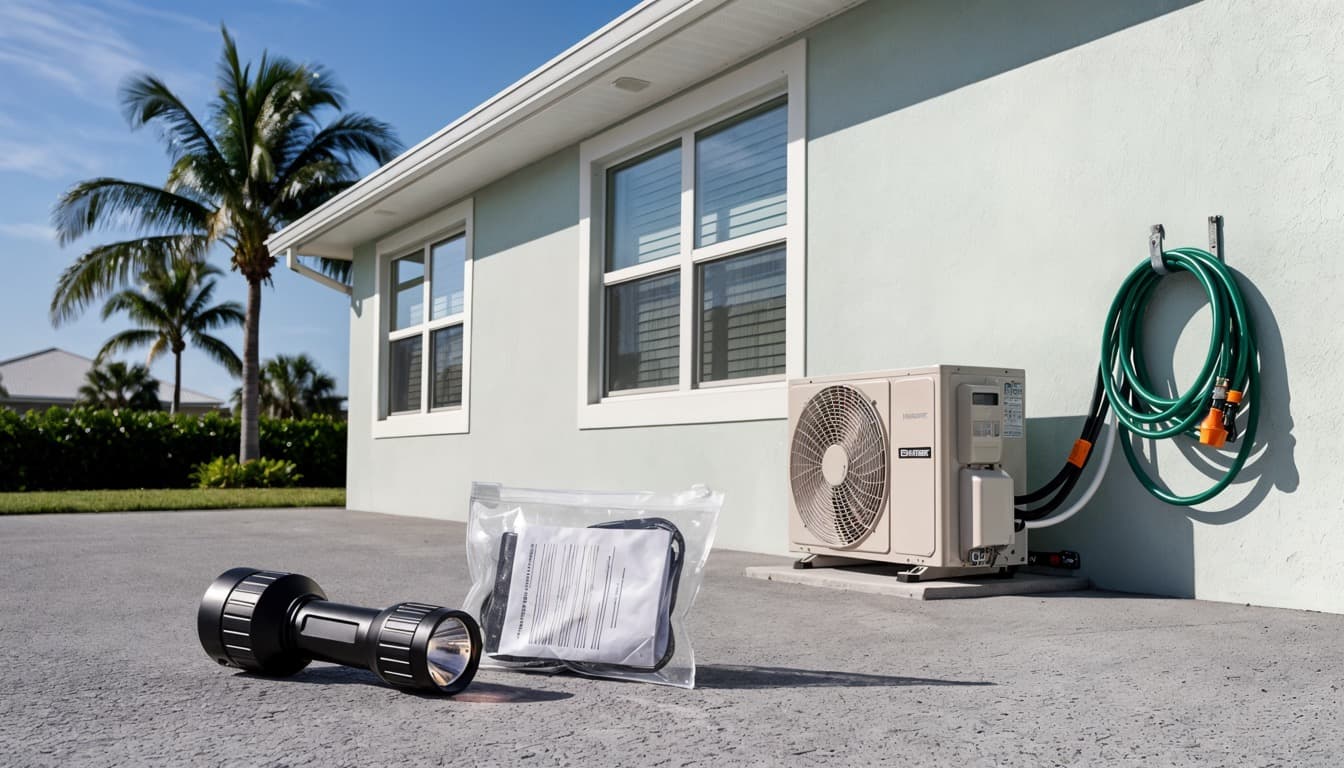
On the Treasure Coast, hurricane preparation is not only about windows, batteries, and the pantry. Your air-conditioning equipment needs a place on the list, too. A good plan will not make an HVAC system stormproof, and it will not replace the instructions for your specific equipment. It does give you a safer starting point before a storm and a clearer way to assess the system afterward.
I tell homeowners and property managers to handle what is reasonable before conditions deteriorate, then leave electrical, refrigerant, and internal equipment work to a qualified technician. The goal is simple: reduce avoidable damage, protect people, and avoid turning the first hot day after a storm into an emergency you could have planned around.
Start with the outdoor unit
Your condenser is built to live outdoors. Rain by itself is not a reason to wrap it in plastic or build a tight cover around it. In fact, a cover can trap moisture, create a wind hazard, or keep debris where it does not belong. Check the manufacturer guidance for your system and do not block normal drainage or ventilation.
Before the weather arrives, walk around the unit without opening panels. Remove loose furniture, planters, toys, and yard debris that could become airborne. Trim only vegetation you can safely handle from the ground; do not use the condenser as a place to stack branches or supplies. Make sure the area around the unit can drain and that there is no loose material immediately beside it.
For a business, add rooftop equipment and refrigeration condensers to the same walk-through. Roof access should be limited to trained, authorized people. A facility manager can document visible conditions, but rooftop work, electrical enclosures, and equipment securement are jobs for qualified professionals.
Know how your system can be shut down
If local emergency guidance, your equipment manufacturer, or your HVAC contractor recommends shutting down the system, know the proper disconnect or breaker *before* the storm. Label the information in your household or facility emergency plan. Do not wait until wind and rain are present to learn what controls what.
This is not a suggestion to work inside electrical panels. If the equipment is hard-wired, the disconnect is damaged, or you are unsure of the procedure, call a licensed professional. The same goes for generators: HVAC equipment and generators need correct sizing, connection, and electrical protection. Never improvise a power connection.
Inside, set the thermostat to a reasonable comfort setting while normal power is available. Close exterior doors and windows, keep blinds or shades ready to reduce solar gain after the storm, and make sure pets, tenants, or staff know where flashlights and contact numbers are stored. A portable fan can be part of a comfort plan, but it is not a replacement for safe mechanical cooling.
Protect the building around the HVAC system
The indoor side of the system matters just as much. If your air handler is in a closet, garage, attic, or mechanical room, look for existing water stains, a blocked access path, or stored items touching the unit. Move valuables and paper records away from an area that has a history of condensate or roof leaks. Do not seal off the equipment; a technician needs clear, safe access.
For commercial properties, update the call list before the storm: owner or manager, building contact, electrician, restoration contractor, refrigeration service, and the person authorized to approve emergency work. Keep the model and serial numbers, warranty information, and recent service notes together. That information saves time when communications are limited.
Restaurants and facilities with perishable inventory should also have a separate refrigeration plan. Our Commercial Refrigeration Uptime Guide covers the value of temperature awareness and maintenance records. HVAC preparedness and food-safety decisions are related, but they are not the same plan.
After the storm: look first, then restart carefully
Once it is safe to go outside, start with a visual inspection from a safe distance. Look for standing water, a shifted condenser, bent guard panels, fallen branches, damaged electrical lines, exposed wiring, or debris packed around the cabinet. Check the home or business for roof or ceiling leaks near the indoor equipment. If there is floodwater around the unit, obvious physical damage, a burning odor, or anything that makes you question electrical safety, leave it off and call for service.
Do not reach into the unit, straighten fins, remove panels, or attempt refrigerant repairs. Those actions can create a shock, injury, or equipment problem. Photograph visible damage for your records if conditions are safe, and write down when power returned and what you observed.
If the system appears intact and power is stable, follow the manufacturer’s restart instructions. Give the system time to operate before deciding whether it is cooling normally. Listen for unusual noises and watch for water around the indoor unit. A thermostat screen lighting up does not prove the entire system is healthy.
Put maintenance ahead of the next storm
The best hurricane checklist begins well before a named storm is on the map. Seasonal maintenance gives a technician an opportunity to inspect drainage, electrical components, operating pressures, coils, mounting condition, filters, and visible wear. It also gives you a baseline: when the system was last serviced, what was observed, and whom to call if conditions change.
For Treasure Coast homes, schedule a residential maintenance visit before the season gets busy. For businesses, ask about a documented commercial maintenance plan that includes the equipment your operation depends on. If you are concerned about the condition of your HVAC system or need help after storm-related damage, contact A/C Advantage for professional HVAC service. We can assess the equipment safely and help you make the next decision based on what is actually in front of us.
Related hub: How Often Should You Service Your AC in Florida?
About the author
Scott Camire, Owner of A/C Advantage Inc.
Scott Camire is the founder of A/C Advantage Inc. in Port St. Lucie, Florida. He began his career in HVAC and commercial refrigeration in 1978 and founded A/C Advantage in 2006, building the company on what he calls “old fashioned service with modern technology.” A/C Advantage is a Florida Certified Mechanical Contractor (License #CMC1249807) with EPA-certified technicians, serving homes and businesses across the Treasure Coast and the Palm Beaches, including Port St. Lucie, Stuart, Palm City, Jensen Beach, Fort Pierce, Vero Beach, Sebastian, and Tradition.
Need help with your system?
Call A/C Advantage at (772) 336-7366. A live person answers 24 hours a day, 365 days a year. Or schedule service online.