Emergency Preparedness • 6 minutes
Generator and HVAC Safety After a Florida Storm: What Not to DIY
By Scott Camire, Owner | A/C Advantage Inc. •
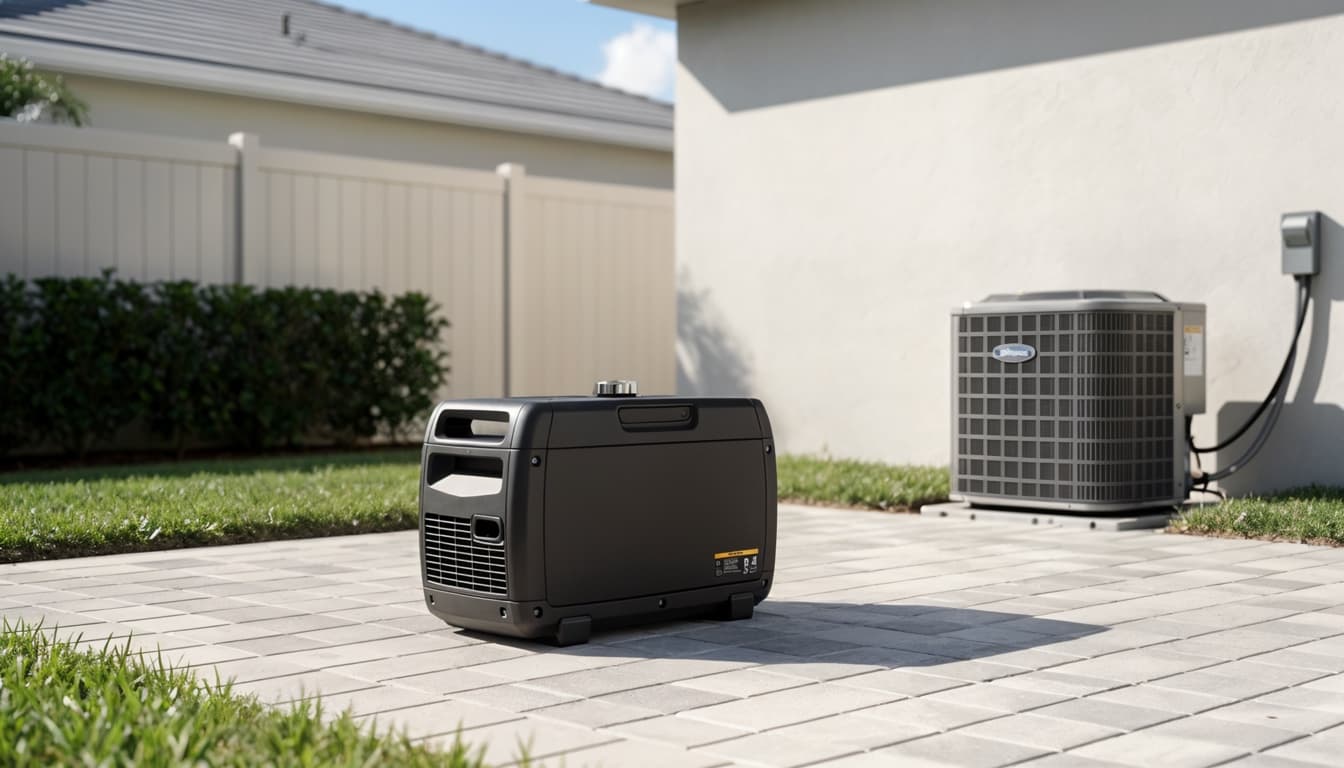
After a Florida storm, it is understandable to want the air conditioning back as soon as power returns. The safe answer is not always to start the system immediately or find a way to connect it to a generator. Storm conditions can leave behind standing water, damaged equipment, compromised wiring, and utility issues that are not visible from the driveway. HVAC equipment and generator connections both involve electrical hazards. They deserve a cautious, professional approach.
This is not a how-to guide for wiring, transfer equipment, generator sizing, or HVAC repair. Those jobs can require permits, code-compliant equipment, and licensed electrical or HVAC professionals. The goal here is to help owners and property managers make safer decisions in the first hours after a storm without creating a second emergency.
Start with people, structure, and utilities
Follow local emergency guidance before focusing on comfort equipment. Do not approach downed lines, damaged utility connections, standing water near electrical equipment, or a damaged electrical panel. If there is a gas odor, smoke, fire, or an immediate electrical hazard, move away and contact emergency services or the utility as appropriate. Keep staff, residents, and visitors away from affected mechanical areas until they can be assessed.
From a safe distance, look for obvious exterior concerns: debris resting against the outdoor unit, a shifted or damaged condenser, floodwater, bent panels, fallen branches, or a damaged disconnect enclosure. Do not touch the unit, open panels, or try to straighten fins, wiring, or supports after storm damage. Take a few clear photos from a safe location for your records and for the professional you call.
If the home or building has water intrusion, note where it reached. Water around an air handler, rooftop access equipment, electrical disconnect, or panel changes the urgency and the scope of the inspection. A system can look normal on the outside while a component or connection has been affected. Do not turn it on simply to see if it runs.
What not to do with a generator
Never operate a portable generator indoors, in a garage, in a breezeway, or near doors, windows, or vents. Generator exhaust presents a serious carbon monoxide hazard. Follow the manufacturer’s placement, fueling, grounding, and operating instructions, as well as local guidance. Keep it dry and use it only in a suitable outdoor location; do not improvise protection that interferes with safe ventilation.
Do not backfeed a building through an outlet, make homemade cords or adapters, or connect a portable generator directly to an AC condenser, air handler, electrical panel, or building wiring. Those shortcuts can endanger occupants, utility workers, and equipment. A generator connection to a building needs the correct approved transfer equipment and a qualified electrician. An HVAC system may also require a professional review of generator capacity, startup load, voltage stability, and the equipment manufacturer’s requirements before it is included in a backup-power plan.
Avoid the temptation to “just run the blower” or force a thermostat setting. The outdoor unit, indoor equipment, controls, and electrical circuit work together. Partial or improvised power can cause damage rather than comfort. If portable backup power is available, use it only for loads the generator and manufacturer instructions support—not as a reason to alter HVAC wiring.
A careful return-to-service checklist
Once utility power is reliably restored and it is safe to access the property, start with observation. Check that exterior vents and drains are clear without reaching into damaged equipment. Look for water, loose debris, new vibration, unusual odors, or visible damage around the HVAC system. Inside, look at ceilings near the air handler and the floor around accessible equipment for water. Do not remove access panels to investigate.
Set the thermostat to off before power restoration if you can do so without accessing unsafe areas. When power returns, give the system a moment to stabilize and follow the manufacturer’s normal operating guidance. If the system does not start normally, trips a breaker, makes unusual sounds, smells hot or burnt, leaks water, or fails to cool, turn it back off and call a professional. Do not repeatedly reset breakers or cycle the thermostat in an effort to make it start.
For commercial properties, document the status of each unit: location, visible damage, water exposure, current power condition, and whether the equipment was operating normally before the storm. Keep rooftop and electrical-room access restricted until qualified personnel determine it is safe. A planned inspection can be much more efficient when the service team receives a simple, organized report.
Plan for the next outage before the next storm
The right time to determine whether HVAC can be supported by backup power is before an outage. Property owners should work with a licensed electrician and qualified HVAC professional to evaluate the equipment, the intended loads, transfer equipment, installation requirements, and maintenance responsibilities. A restaurant, medical office, multifamily property, and single-family home will have very different priorities.
Preventive HVAC service also matters before storm season. Secure equipment as designed, clear drainage paths, maintain filters and coils, and address known electrical or condensate concerns before a storm puts the system under stress. Visit Emergency AC Repair for service options and read our AC Drain Line Problems in Florida guide for one common moisture concern.
After a storm, the safest DIY decision is often deciding not to DIY. Keep people away from hazards, avoid improvised generator connections, document visible conditions from a safe distance, and contact A/C Advantage for HVAC evaluation. If electrical damage or a generator connection is involved, bring in a licensed electrician as well.
About the author
Scott Camire, Owner of A/C Advantage Inc.
Scott Camire is the founder of A/C Advantage Inc. in Port St. Lucie, Florida. He began his career in HVAC and commercial refrigeration in 1978 and founded A/C Advantage in 2006, building the company on what he calls “old fashioned service with modern technology.” A/C Advantage is a Florida Certified Mechanical Contractor (License #CMC1249807) with EPA-certified technicians, serving homes and businesses across the Treasure Coast and the Palm Beaches, including Port St. Lucie, Stuart, Palm City, Jensen Beach, Fort Pierce, Vero Beach, Sebastian, and Tradition.
Need help with your system?
Call A/C Advantage at (772) 336-7366. A live person answers 24 hours a day, 365 days a year. Or schedule service online.